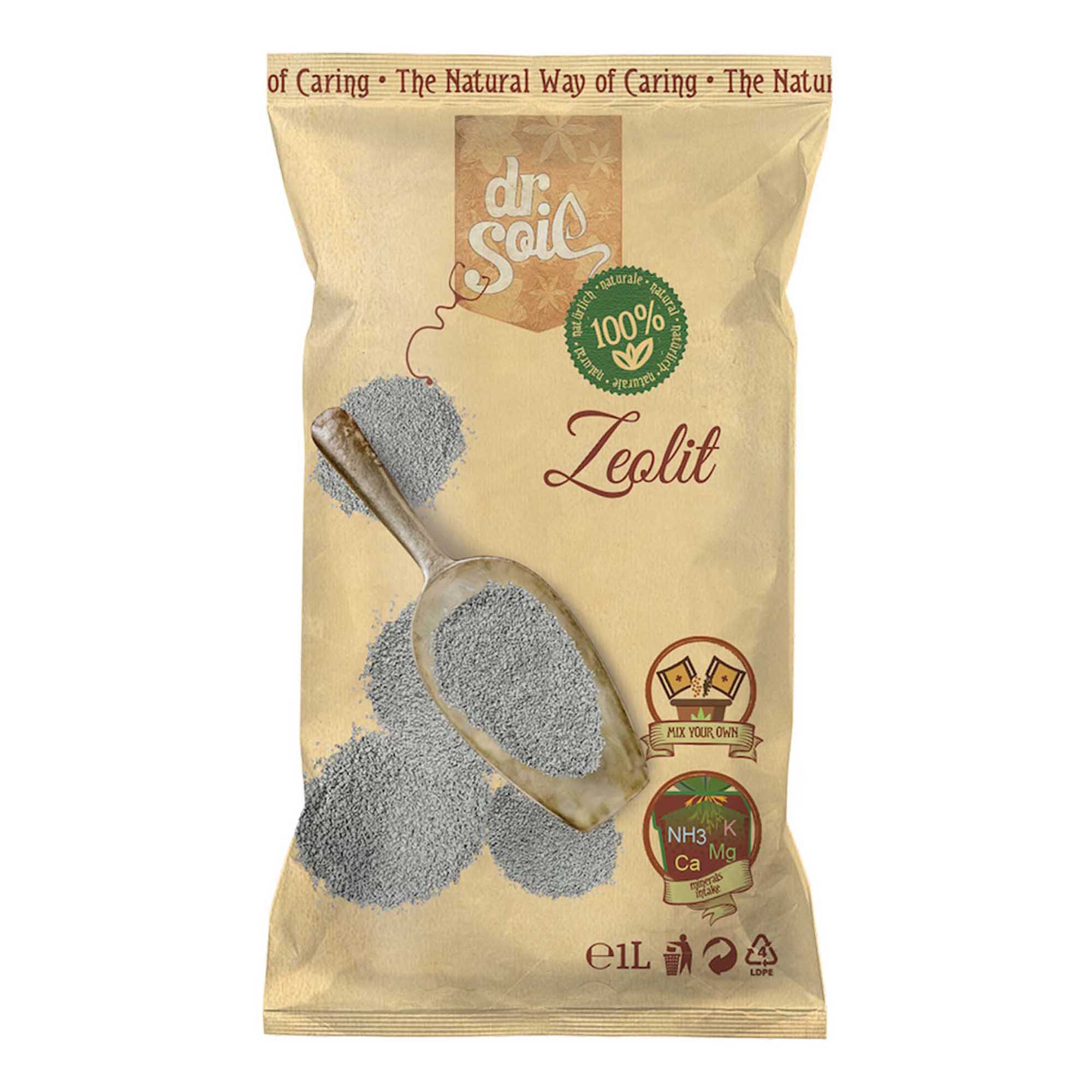
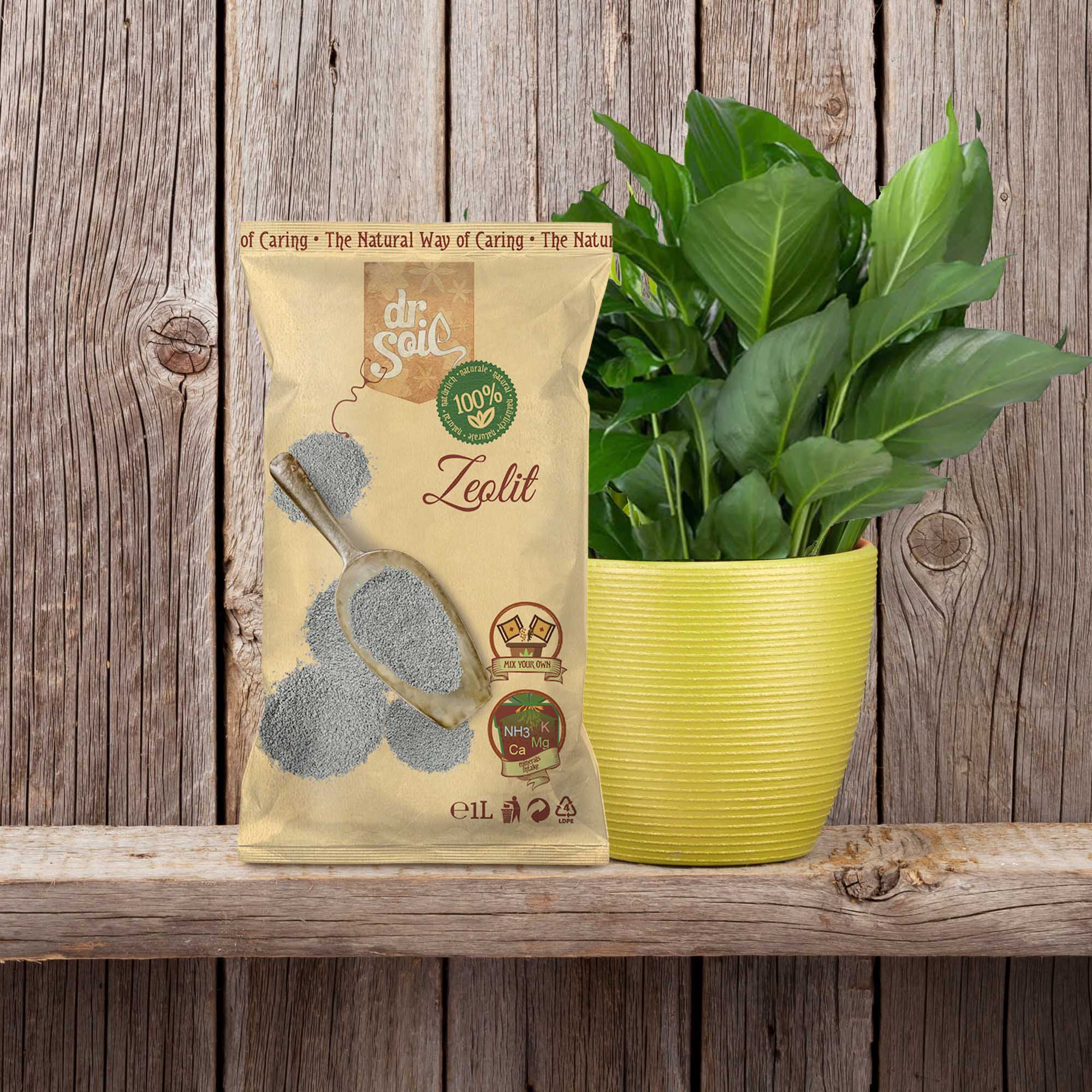
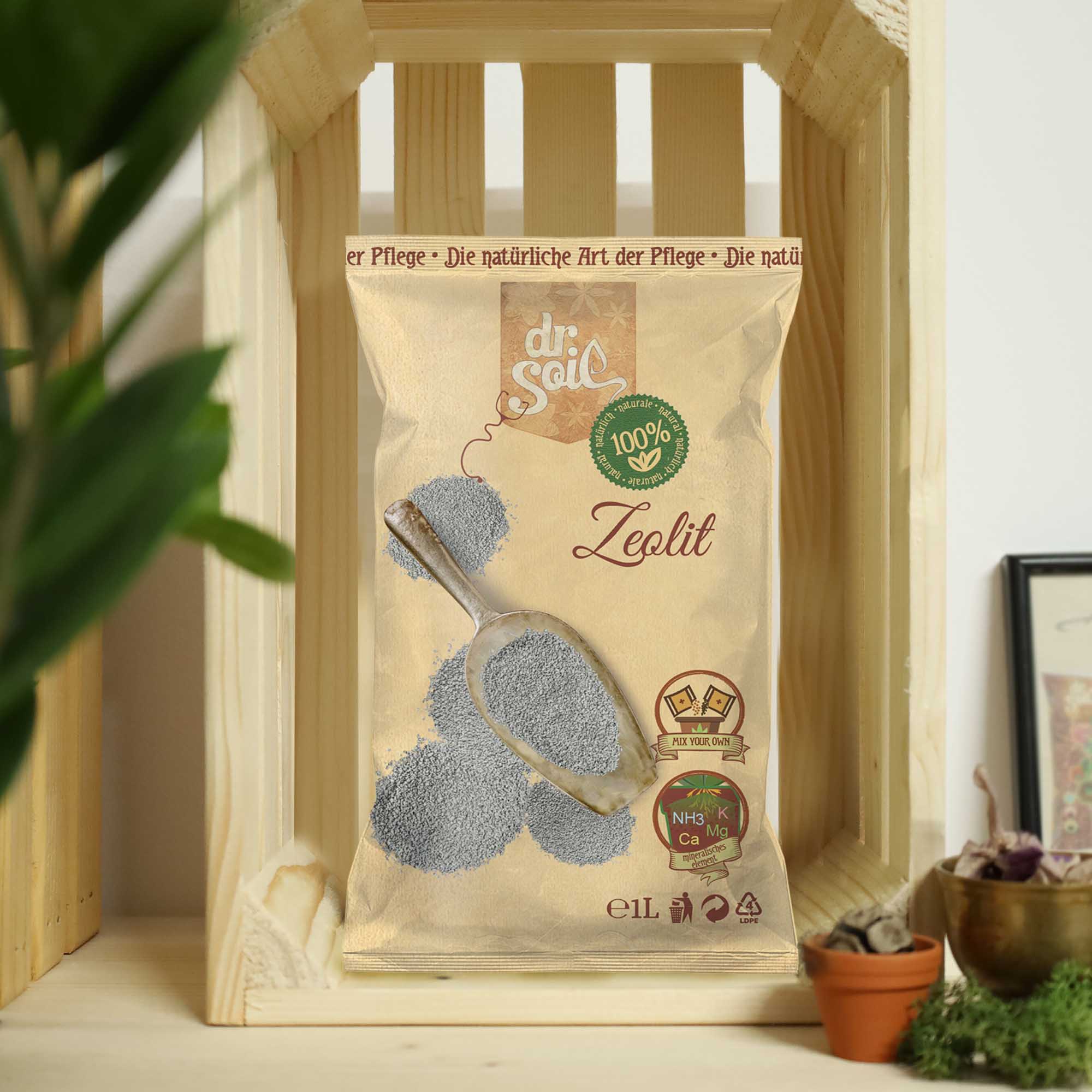
A natural solution for a healthy and vibrant garden. Dr.Soil Zeolite 1L improves soil quality for strong, hardy plants.
£5.49
Natural clinoptilolite zeolite sourced from certified organic volcanic tuff deposits in Rupea, Braşov County, Romania. A unique crystalline mineral with a honeycomb pore structure that simultaneously captures and slowly releases nutrients, holds water in the root zone, and permanently improves the efficiency of any growing medium it is incorporated into. One application lasts decades.
Zeolites are hydrated aluminosilicate minerals formed over millions of years through the reaction of volcanic ash with alkaline groundwater, producing a crystalline three-dimensional lattice of extraordinary regularity. The deposits at Rupea, in the heart of Transylvania’s volcanic tuff complex, are among the few high-quality zeolite occurrences in Romania, characterised by a clinoptilolite content of over 80% — the threshold at which all key agricultural properties are reliably expressed.
The defining characteristic of zeolite is its open, honeycomb-like pore structure — a network of tunnels, channels, and cavities at the molecular scale (pore diameter approximately 4–7 Ångströms) that gives it a remarkable dual capacity: to function simultaneously as a molecular sieve (selectively admitting molecules by size), a cation exchanger (capturing and releasing nutrient ions on demand), and a water reservoir (absorbing up to 60% of its own weight in water and releasing it under plant demand). No other natural mineral used in horticulture combines all three of these functions.
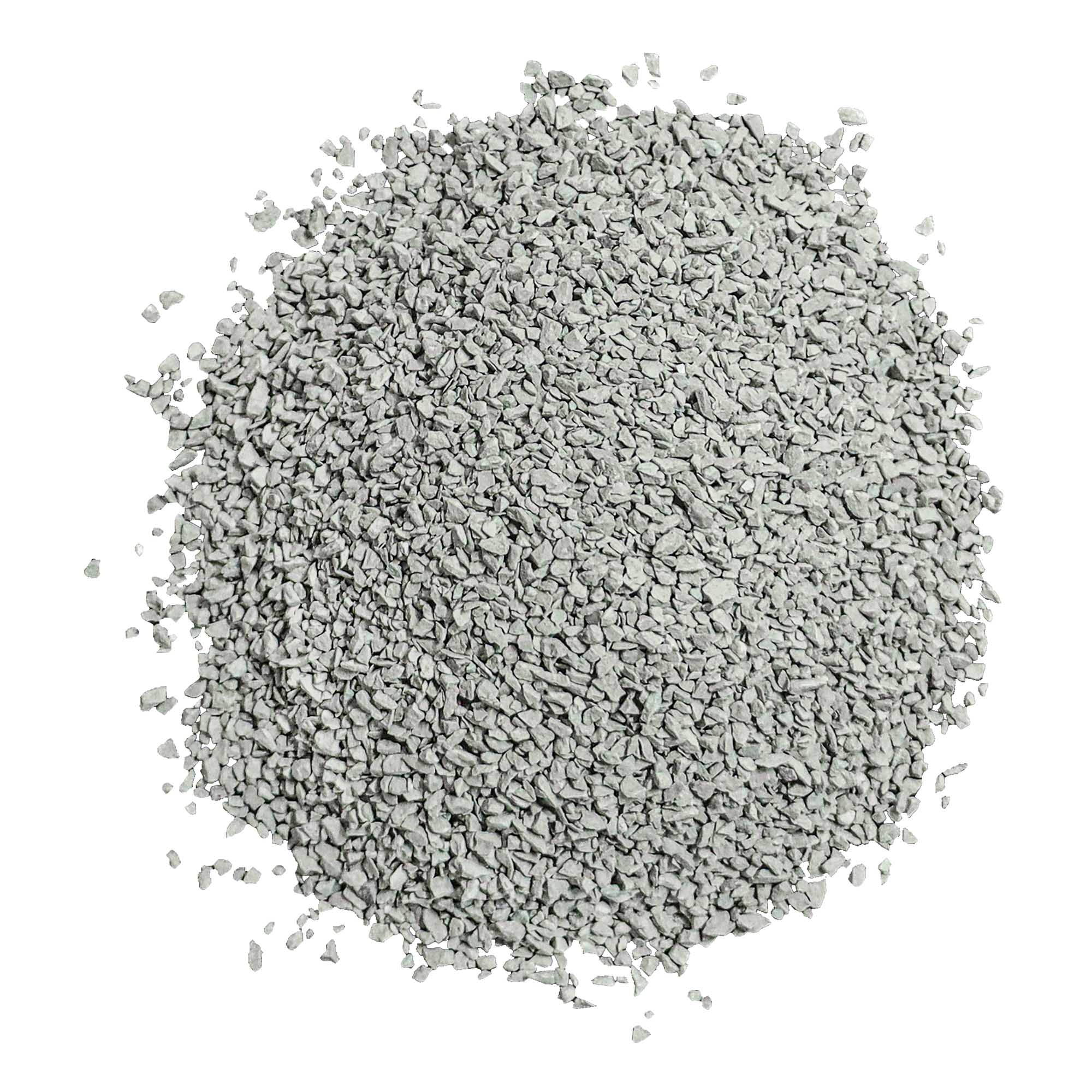
The Rupea zeolite is processed to the stage of “activated zeolite” — a purely mechanical process of quarrying, crushing, sieving, and purification without any chemical treatment or toxic substances. The 4–8 mm particle size is the horticultural standard: coarse enough to maintain open soil structure, fine enough to remain in effective root-zone contact throughout the life of the substrate.
The Rupea deposits sit within a complex of Neogene volcanic tuffs in central Transylvania. Mineralogical studies confirm that the entire rock mass in the quarried perimeter has undergone complete zeolitisation — virtually all of the original volcanic glass has been transformed into zeolite minerals. The primary crystalline form present is Ca-clinoptilolite at over 80% purity. The deposit has been independently analysed for chemical composition, radioactivity, heavy metal concentration, dioxin content, and cation exchange capacity — all confirming suitability for certified organic agricultural and food-chain applications.
Unlike most inorganic substrate components, clinoptilolite is not chemically inert — it contains plant-available elements within its crystal lattice that are slowly released through weathering and ion exchange: silicon (Si), calcium (Ca), potassium (K), magnesium (Mg), iron (Fe), copper (Cu), and zinc (Zn).
Beyond the minerals it contains directly, zeolite’s most important nutritional contribution is what it captures and holds from the surrounding environment: ammonium (NH&sub4;&sup+;) from fertilisers, manure, or organic decomposition; potassium (K&sup+;); calcium (Ca²&sup+;); and magnesium (Mg²&sup+;) — all held in the pore channels, protected from leaching, and released progressively as plant roots exchange hydrogen ions for the stored cations. This transforms zeolite into a nutrient bank that makes every fertiliser application more efficient.
Dr.Soil Zeolith at 4–8 mm is a permanent soil and substrate amendment designed to improve the fundamental efficiency of the growing system — reducing water consumption, reducing fertiliser inputs, improving soil structure, and supporting healthier root systems across all horticultural applications.
Dr.Soil Zeolith 4–8 mm is ready to use directly from the bag. No rinsing, activation, or pre-treatment is required.
| Application | Rate | Method |
|---|---|---|
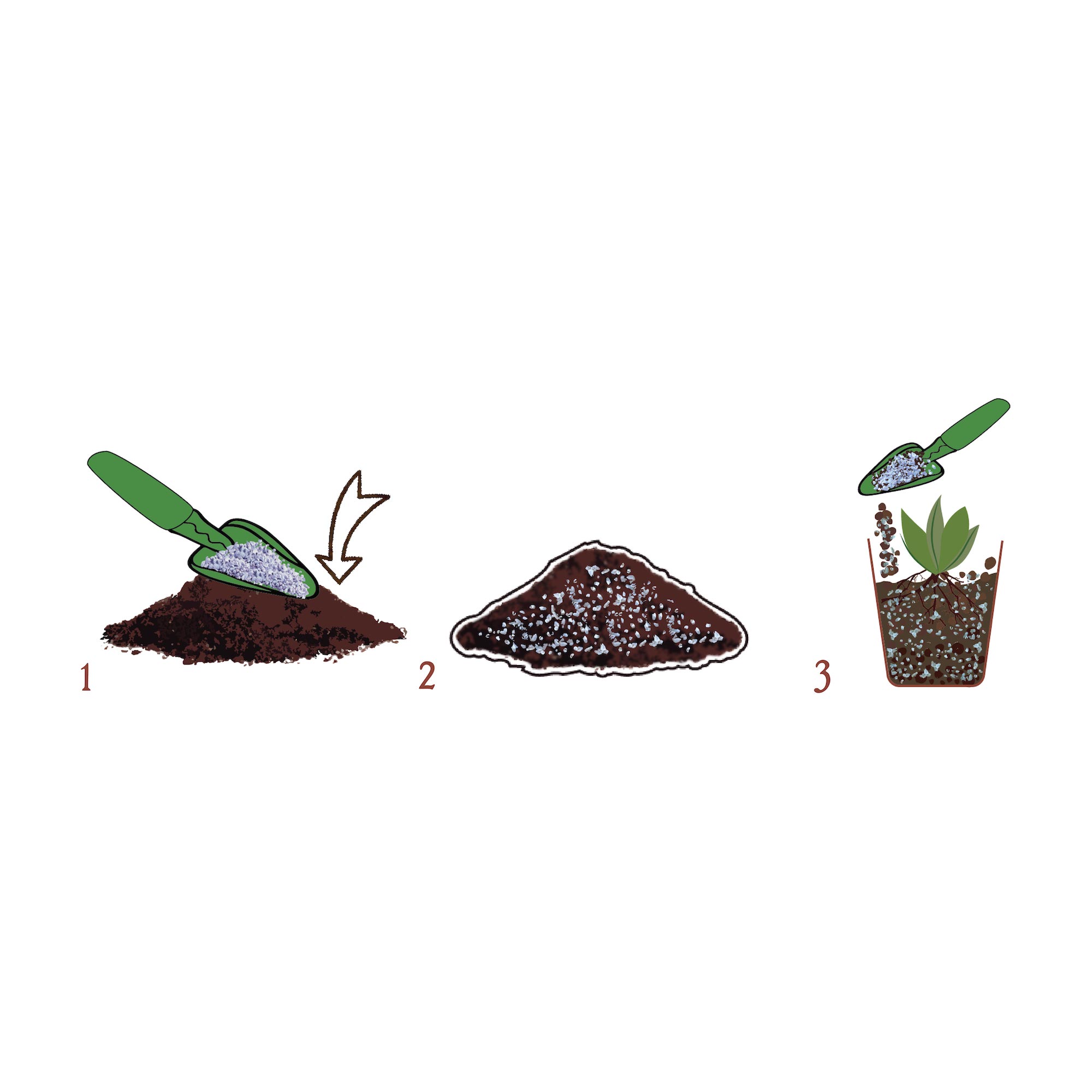
| Potting mix amendment | 10–20% by volume | Blend evenly with compost, perlite, or other substrate components. Measurably reduces watering and feeding frequency at 10%; provides a substantial nutrient and moisture reservoir at 20%. |
| Garden bed and raised bed soil | 5–15% by volume of root zone | Incorporate into the top 20–25 cm of soil before planting. Particularly effective in sandy soils. A single incorporation lasts the life of the bed. |
| Mixed with fertiliser before application | Equal volume to fertiliser | Mix granular or pelleted organic or mineral fertiliser with zeolite before applying. Zeolite captures released ammonium immediately and meters it out gradually. Particularly effective with fast-release nitrogen sources. |
| Compost and manure amendment | 5–10% of compost volume | Mix into compost heaps or manure stores to reduce ammonium volatilisation during decomposition. Reduces odour and retains nitrogen in the finished compost. |
| Lawn and turf incorporation | 3–5 kg per m² at 15–20 cm depth | Incorporate during turf construction or after deep-tine aeration. The 4–8 mm size is well-suited to turf profiles. |
| Tree and shrub planting hole | 15–20% of backfill volume | Blend with excavated soil and use as backfill around the root ball. Captures any fertiliser applied at planting and holds moisture through the critical establishment phase. |
The most impactful use: mixing zeolite with any nitrogen source before application is the single highest-return use of this product. Ammonium nitrogen — whether from urea, blood meal, or manure — is captured by the zeolite structure within minutes of contact. Instead of being lost through leaching or volatilisation (which can account for 30–50% of applied nitrogen), it is held until plant roots exchange hydrogen ions to release it.
Coverage: one litre of Dr.Soil Zeolith is sufficient to amend 5–10 litres of potting substrate, treat the planting holes of 3–5 trees or shrubs, enrich 10–20 litres of compost or fertiliser before application, or incorporate into a small raised bed for permanent nutrient and water retention improvement.
Before planting or potting is the optimal moment — incorporating zeolite into the substrate before the root system is established ensures that the nutrient and moisture retention benefits are available from the very first day of root growth.
When preparing new garden beds or raised beds in spring — a single deep incorporation delivers benefits across multiple growing seasons without requiring reapplication. This is one of zeolite’s most compelling properties: a permanent infrastructure investment in the soil.
At every fertiliser application — mixing zeolite with fertiliser before broadcasting is effective year-round. The ammonium capture effect begins within minutes of contact and continues until the nitrogen is consumed by plant roots.
During drought periods or in water-limited situations — the water retention and release properties of zeolite are most visibly beneficial when irrigation is restricted. A substrate containing zeolite maintains plant-available moisture measurably longer than one without.
Store in the original sealed bag in a dry location. Zeolite is completely stable in storage — it will not degrade, absorb moisture harmfully, or lose its exchange capacity over time. Keep dry between uses to prevent pre-loading of the pore network with water before incorporation.
Dr.Soil Zeolith is non-toxic, non-flammable, odourless, and presents no health or environmental hazard in normal horticultural use. Independently tested and confirmed safe for use around edible crops, in organic systems, and in direct contact with plant roots.
Dr.Soil Zeolith — Natural Clinoptilolite · Net volume: 1 litre · Particle size: 4–8 mm · Clinoptilolite ≥80% · Si/Al >4 · CEC: 150–250 cmol/kg · pH ~7.0 · Origin: Romania · Certified organic · No chemical processing