£5.49
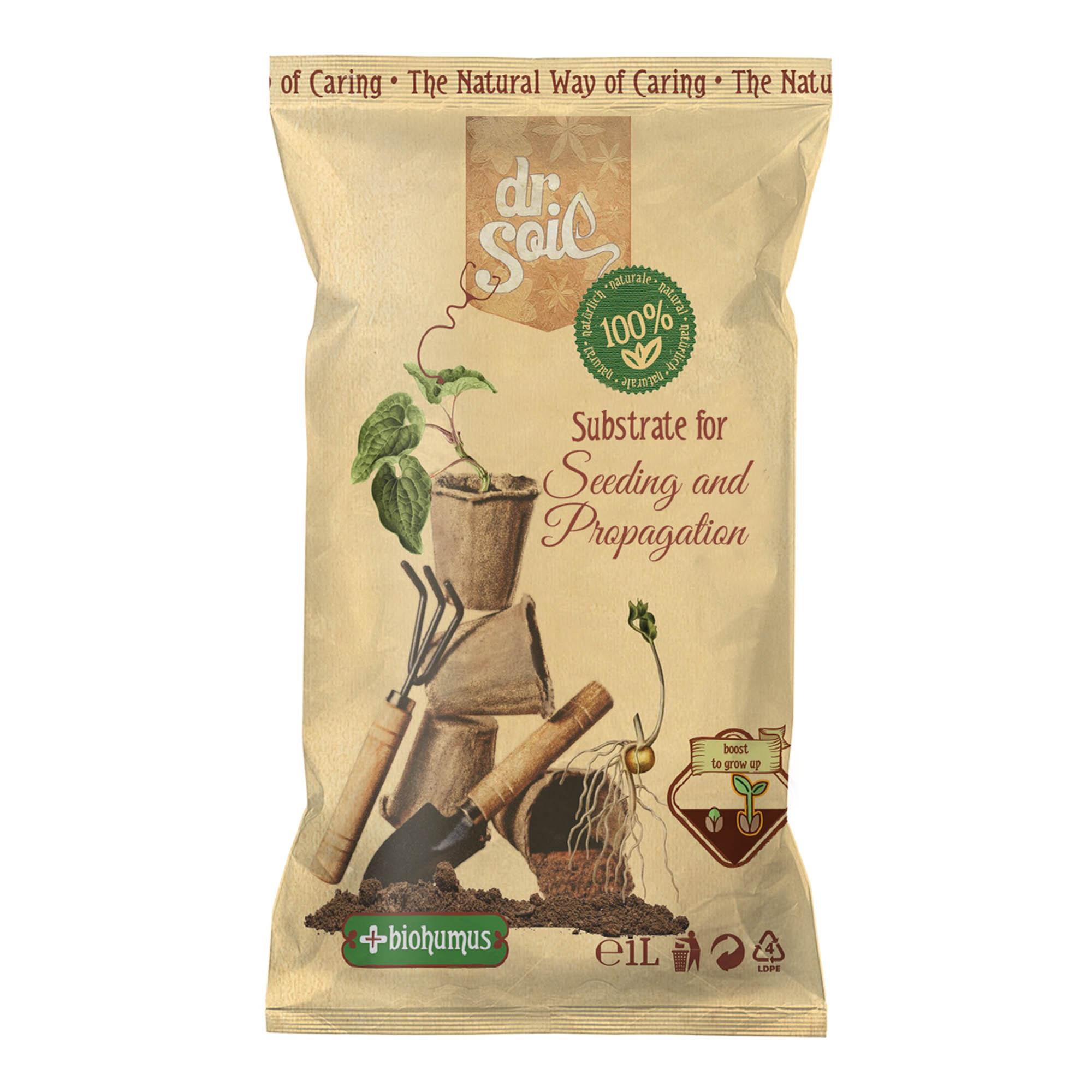
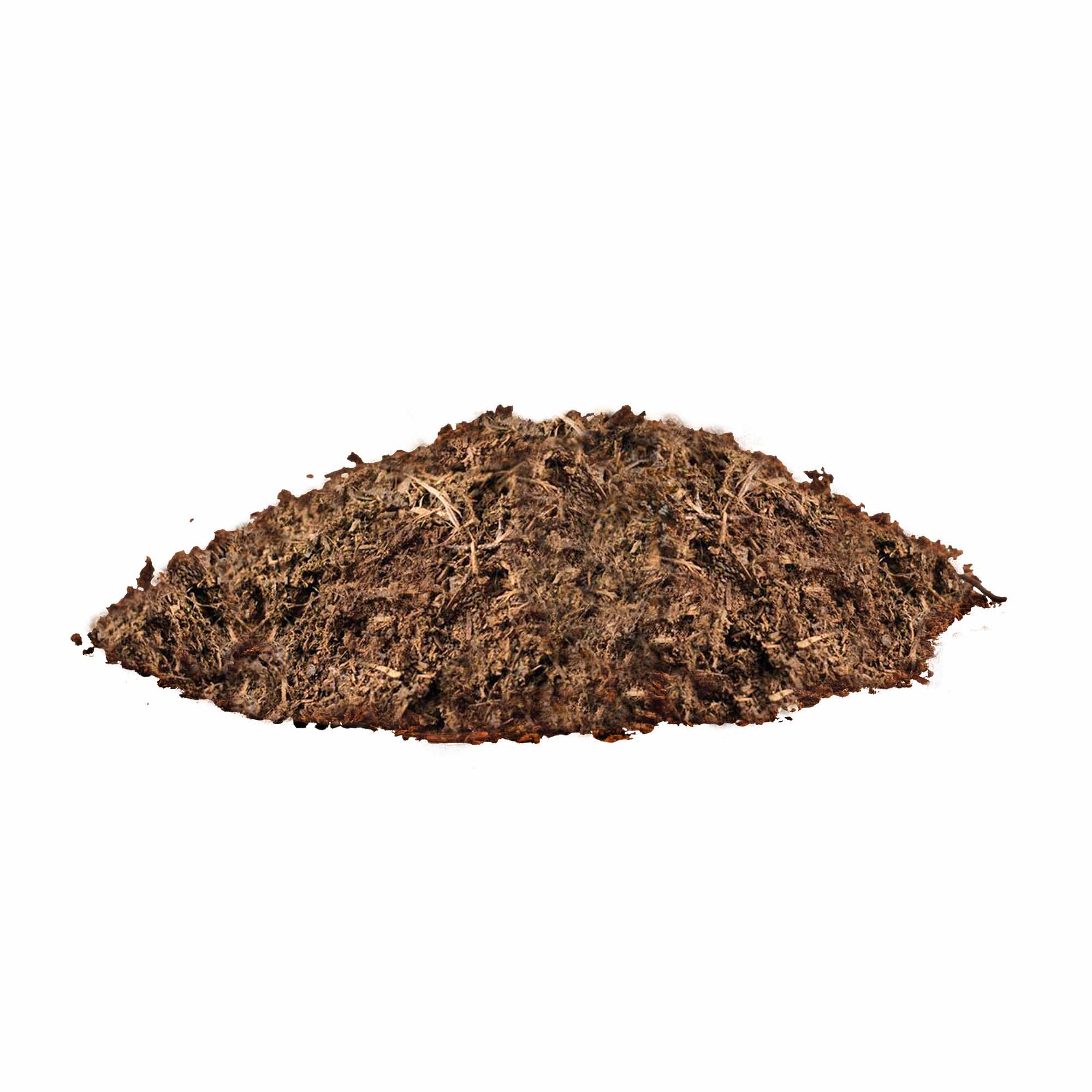
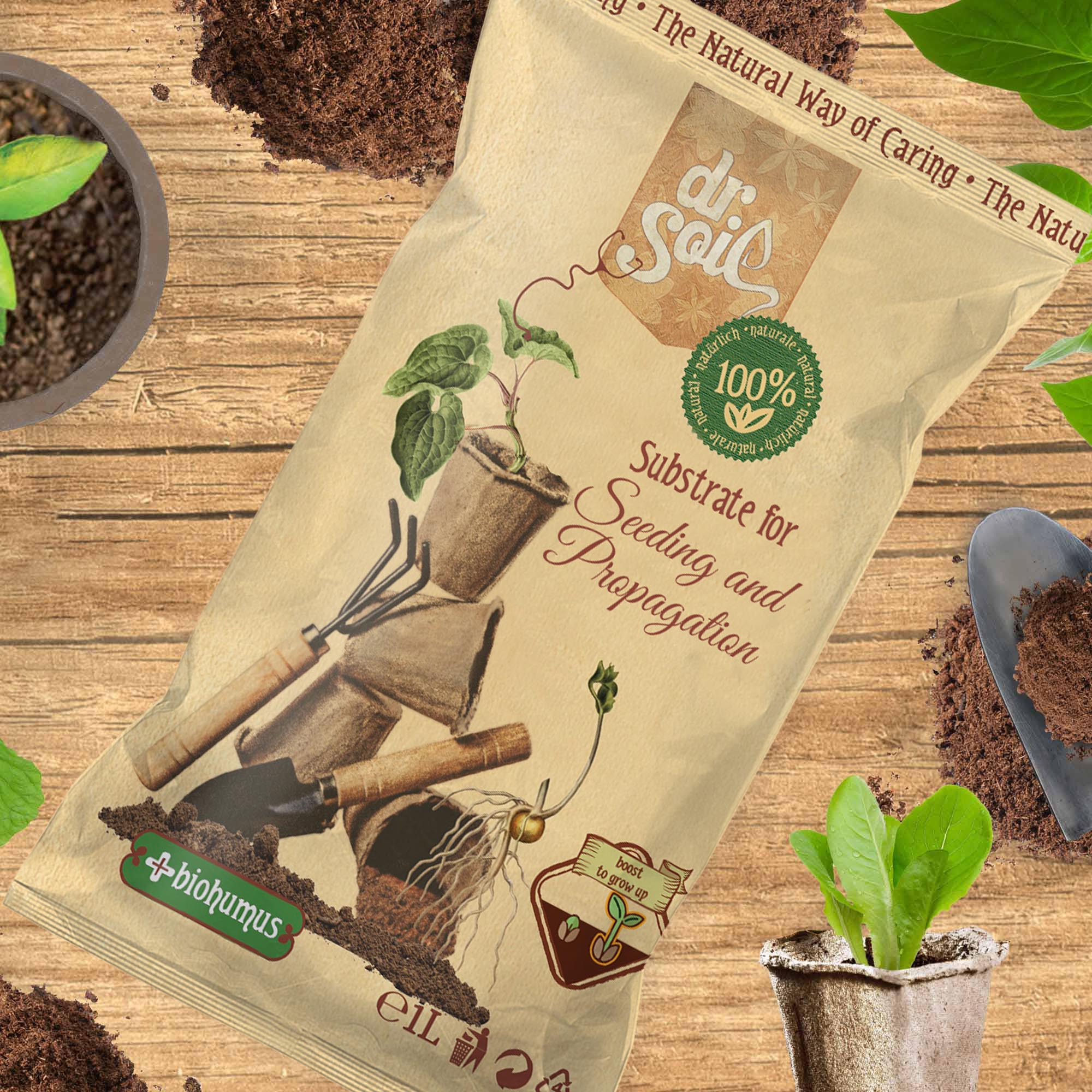
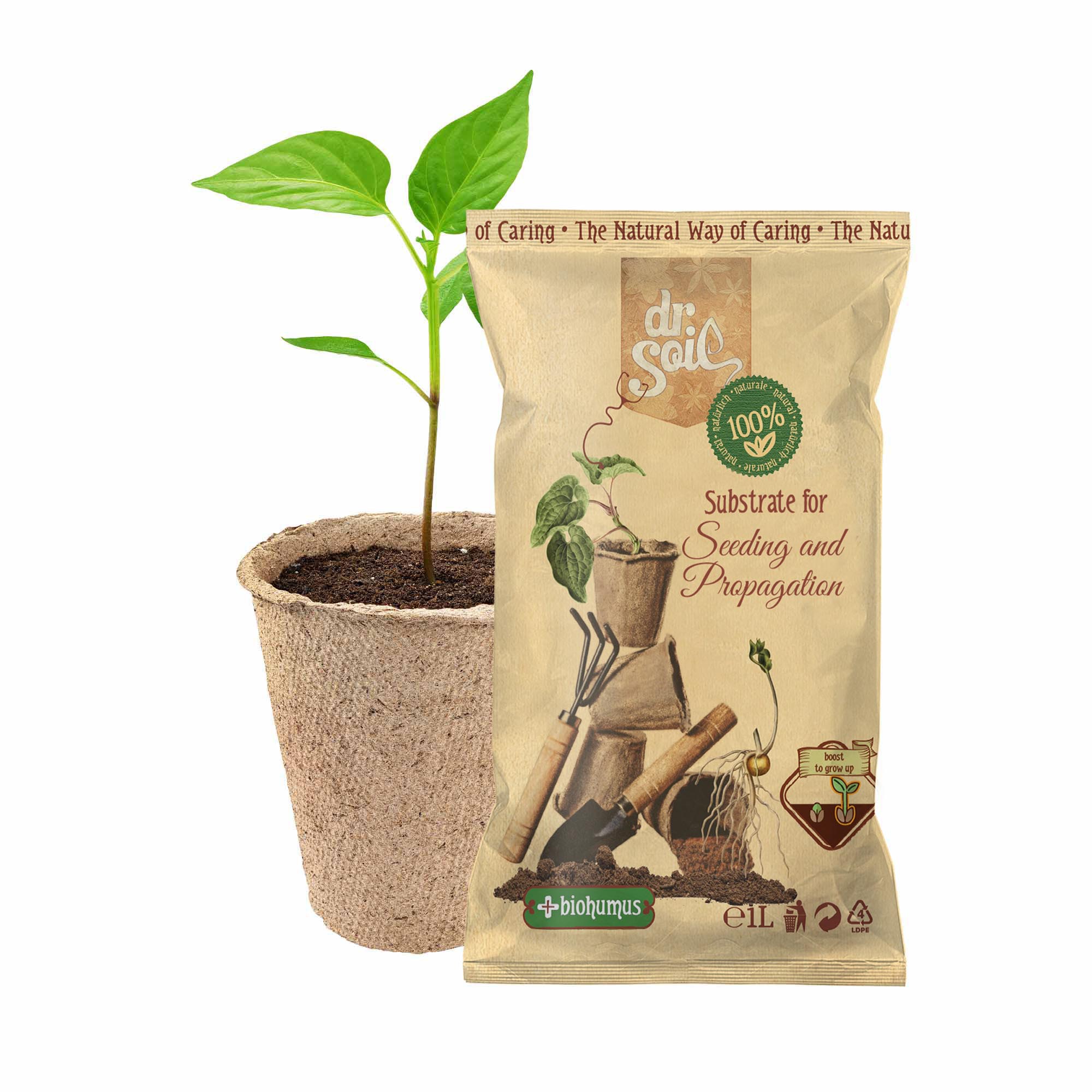
A complete, pre-fertilised growing medium formulated for seeds and seedlings at the most critical and demanding stage of plant life — combining peat, worm castings, Mediterranean pine bark humus, green vegetable compost, and organic matter to provide optimal gas exchange, sufficient moisture, very good drainage, and gentle natural nutrition that supports sustainable early development. Pre-fertilised for up to 6 months.
Germination and early establishment impose requirements on a substrate that are often in direct conflict: the medium must be moist enough for seeds to germinate but free-draining enough to prevent damping off; nutritionally present enough to support the seedling after germination but not so rich as to burn the first delicate roots; fine-textured enough for close seed contact but open enough for gas exchange. Dr.Soil Seed Sowing & Planting Substrate resolves all of these tensions through the synergy of five components:
Dr.Soil Seed Sowing & Planting Substrate is formulated for all seeds and seedlings across species — vegetables (tomatoes, peppers, courgettes, beans, peas, brassicas, root vegetables), flowers (annual and perennial bedding plants, hardy perennials), herbs (all culinary and aromatic species from seed), trees and shrubs (from seed or bare-rooted transplant), and any plant at the stage of germination or early establishment.
The germination and establishment stage is the most critical and the most fragile in the plant’s entire life cycle. The substrate requirements at this stage are precise and unforgiving:
The peat provides the moisture retention and fine-textured structure that seeds require for consistent germination. The pine bark humus creates the drainage channels and gas exchange pathways that prevent damping off. The worm castings provide the germination-stimulating hormones that accelerate emergence and the gentle nutrition that supports the seedling’s first weeks without burn risk. The green compost establishes the biologically active environment that supports long-term seedling health. Together they create the most supportive and safest substrate environment for the most vulnerable stage of plant development.
| Application | Method |
|---|---|
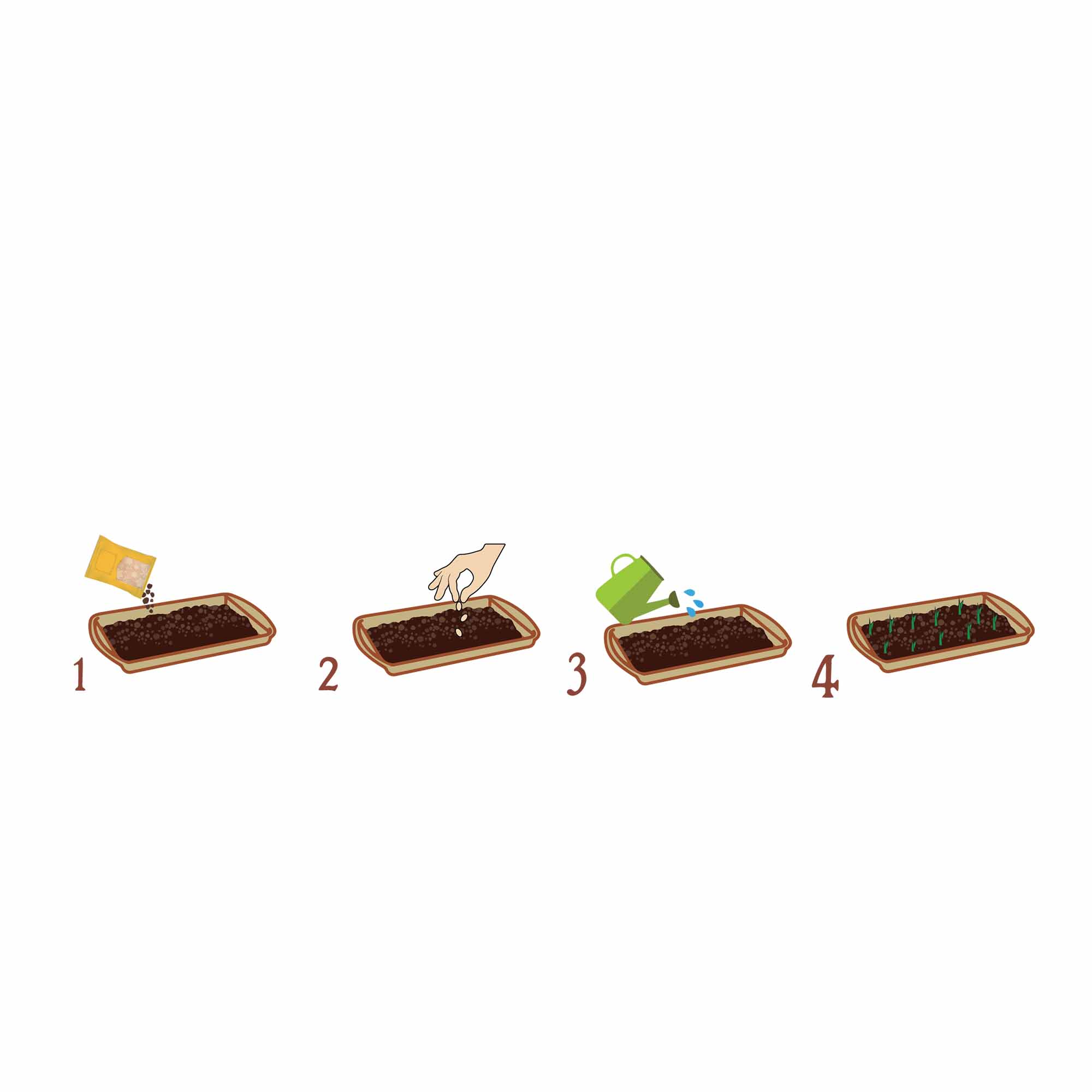
| Seed sowing in trays or modules | Fill the tray or module firmly with substrate to within 1 cm of the rim. Tap to settle. Sow seeds at the depth recommended for the species (typically 2–3 times the seed diameter). Cover with a thin layer of substrate, gently firm, and water gently with a fine rose to avoid displacing seeds. Cover with a propagator lid or cling film until germination. |
| Pot sowing (individual pots) | Fill pots to within 2 cm of the rim. Sow 2–3 seeds per pot and thin to the strongest seedling after germination. Cover and water as above. |
| Transplanting seedlings | When seedlings have developed their first true leaves, carefully lift from the germination tray and transplant into individual pots filled with Dr.Soil Seed Sowing & Planting Substrate. Handle seedlings by the leaves, never the stem. Water in gently after transplanting. |
| Bare-root planting | For bare-rooted transplants, prepare a planting hole in the substrate, spread the roots gently, and fill around them, ensuring good root-to-substrate contact throughout. Water in moderately. |
| Ongoing care | Keep the substrate consistently moist but never waterlogged during germination. After emergence, allow the surface to begin to dry between waterings to encourage root extension into the substrate. No fertiliser required for 6 months. |
Late winter to spring — February through April — is the primary seed-sowing season for most vegetable, flower, and herb species. Starting seeds in Dr.Soil Seed Sowing & Planting Substrate during this period gives seedlings the maximum growing season ahead and allows them to be hardened off and planted out once frost risk has passed.
Autumn sowing for hardy species — many hardy perennials, biennials, and ornamental grasses benefit from autumn sowing, overwintering as young plants, and establishing rapidly the following spring. Dr.Soil Seed Sowing & Planting Substrate supports this approach through its biological activity and natural immunity that help seedlings resist the cool, damp conditions of autumn and winter.
Year-round for indoor sowing — with supplementary lighting and controlled temperature, many species can be sown year-round for indoor or protected cultivation. The substrate’s properties are equally effective at all times of year.
At any transplanting event. Beyond its use for germination, Dr.Soil Seed Sowing & Planting Substrate is an excellent medium for any transplanting operation — potting on young seedlings, establishing rooted cuttings, or planting bare-rooted transplants. The worm castings’ growth hormones and biological content support rapid root re-establishment after the stress of transplanting.
Dr.Soil Seed Sowing & Planting Substrate · Net volume: 1 litre · Pre-fertilised for up to 6 months · Ready-to-use · Composition: peat, worm castings, Mediterranean pine bark humus, green vegetable compost, organic matter · For all seeds and seedlings · No synthetic fertilisers · No chemical additives