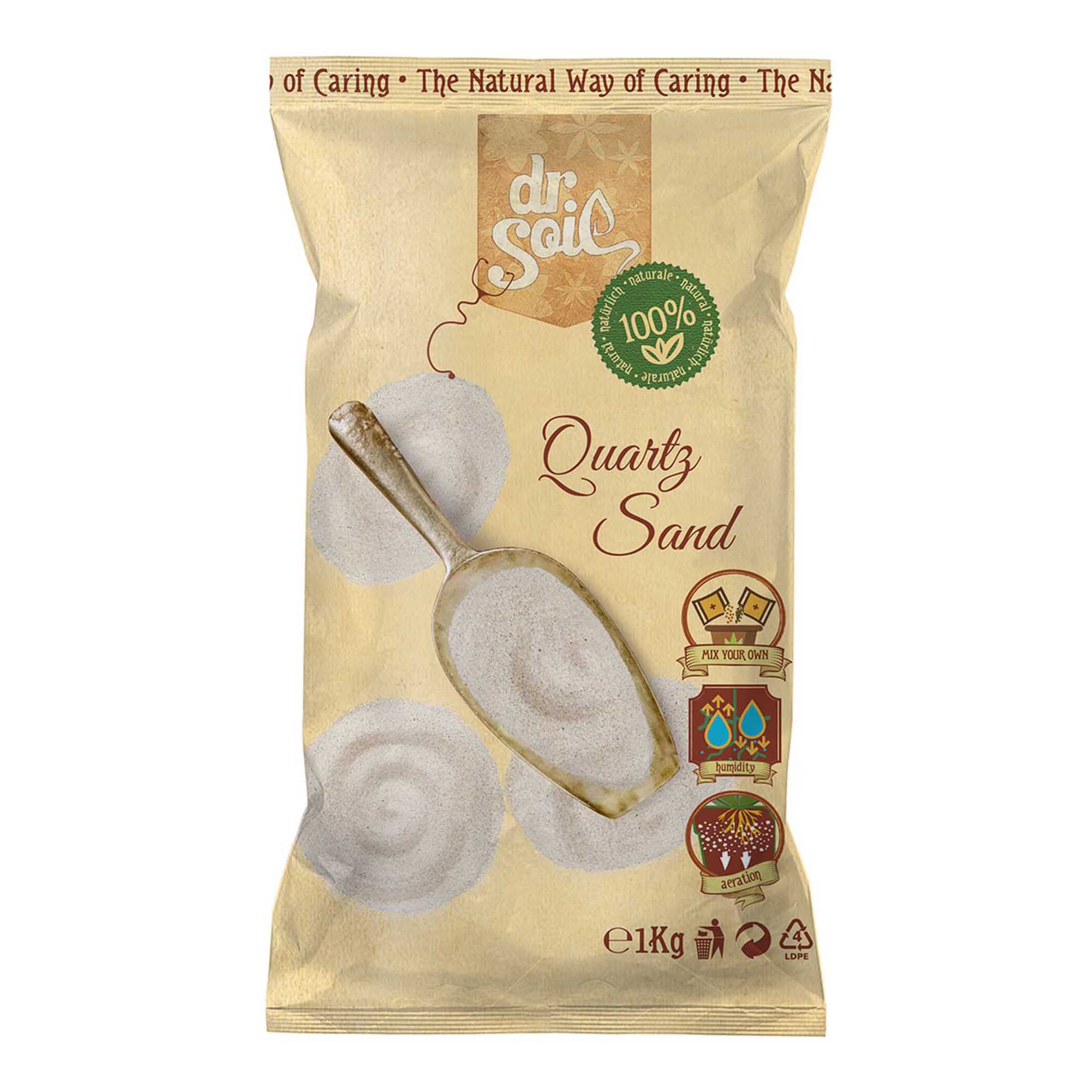
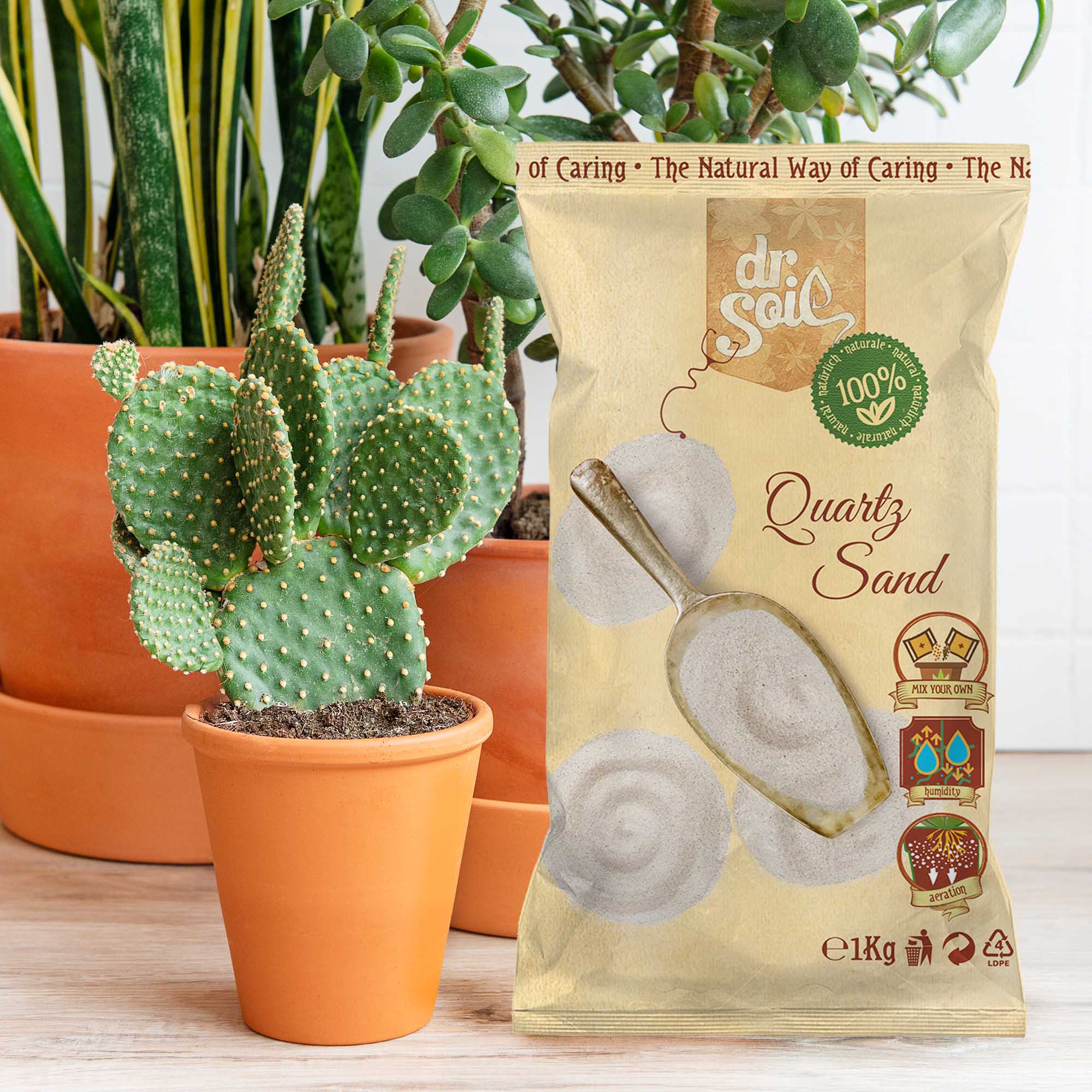
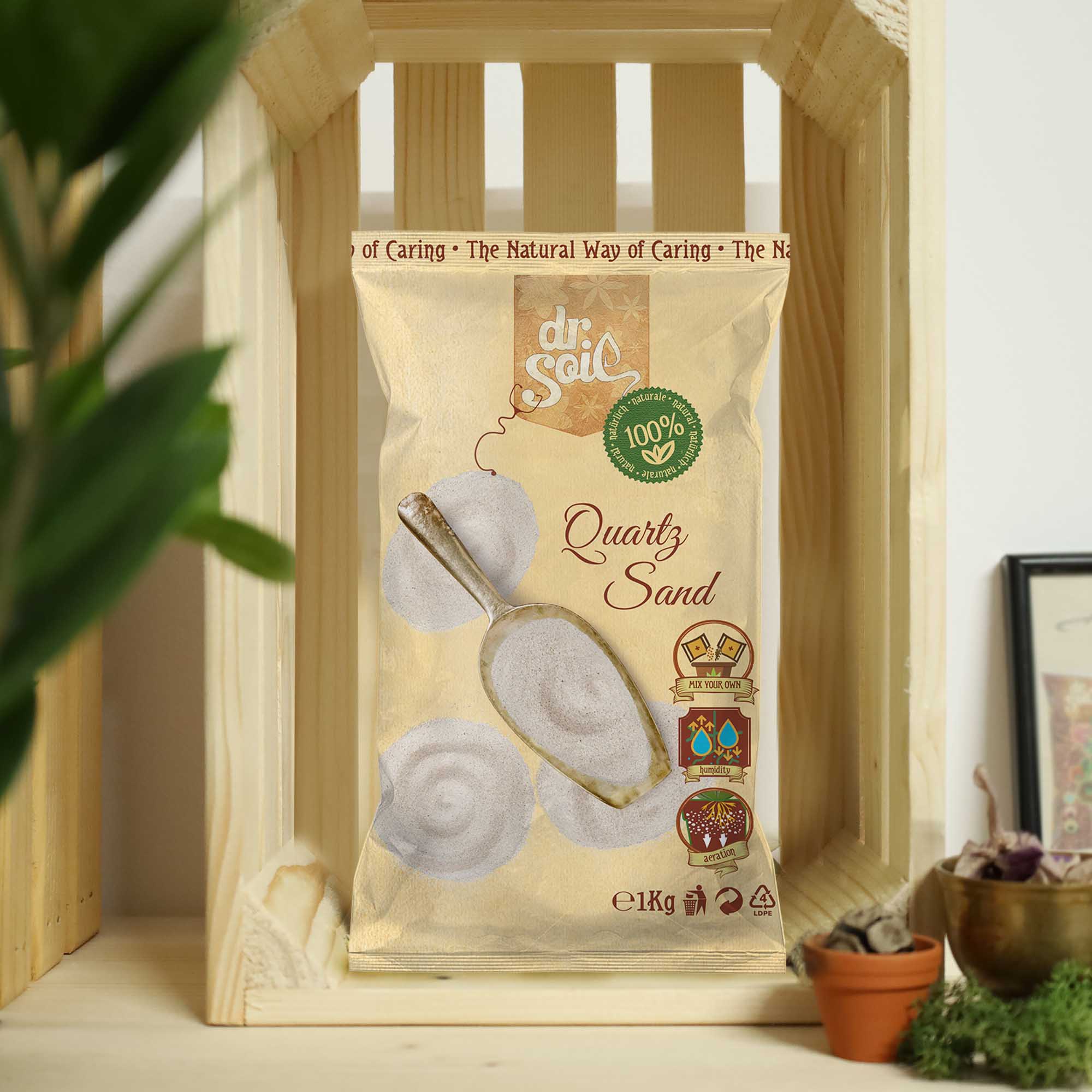
Discover the benefits of Dr.Soil quartz sand: improved drainage, increased soil stability and disease prevention. Transform your garden into a vibrant paradise!
£5.49
High-purity horticultural quartz sand (≥96% SiO&sub2;), industrially washed and sieved to the 0–1 mm fine propagation grade. Lime-free, clay-free, and chemically inert at pH 6.8–7.0. Safe for the most mineral-intolerant plants including carnivorous species. The definitive fine-grade aggregate for seed-sowing mixes, carnivorous plant substrates, lawn topdressing, and substrate density adjustment.
Quartz is silicon dioxide (SiO&sub2;) — one of the most abundant and chemically stable minerals on earth. Quartz sand forms through the weathering and erosion of quartz-bearing rocks over geological time, producing a material characterised by its hardness, chemical inertness, and highly stable crystalline structure. Unlike sedimentary sands or construction sands, which may contain variable proportions of calcium carbonate (lime), clay particles, feldspar, and heavy metal compounds from their geological source, horticultural quartz sand is specifically processed to isolate the pure silicon dioxide fraction: washed to remove all soluble contaminants, and sieved to a precise and consistent particle size.
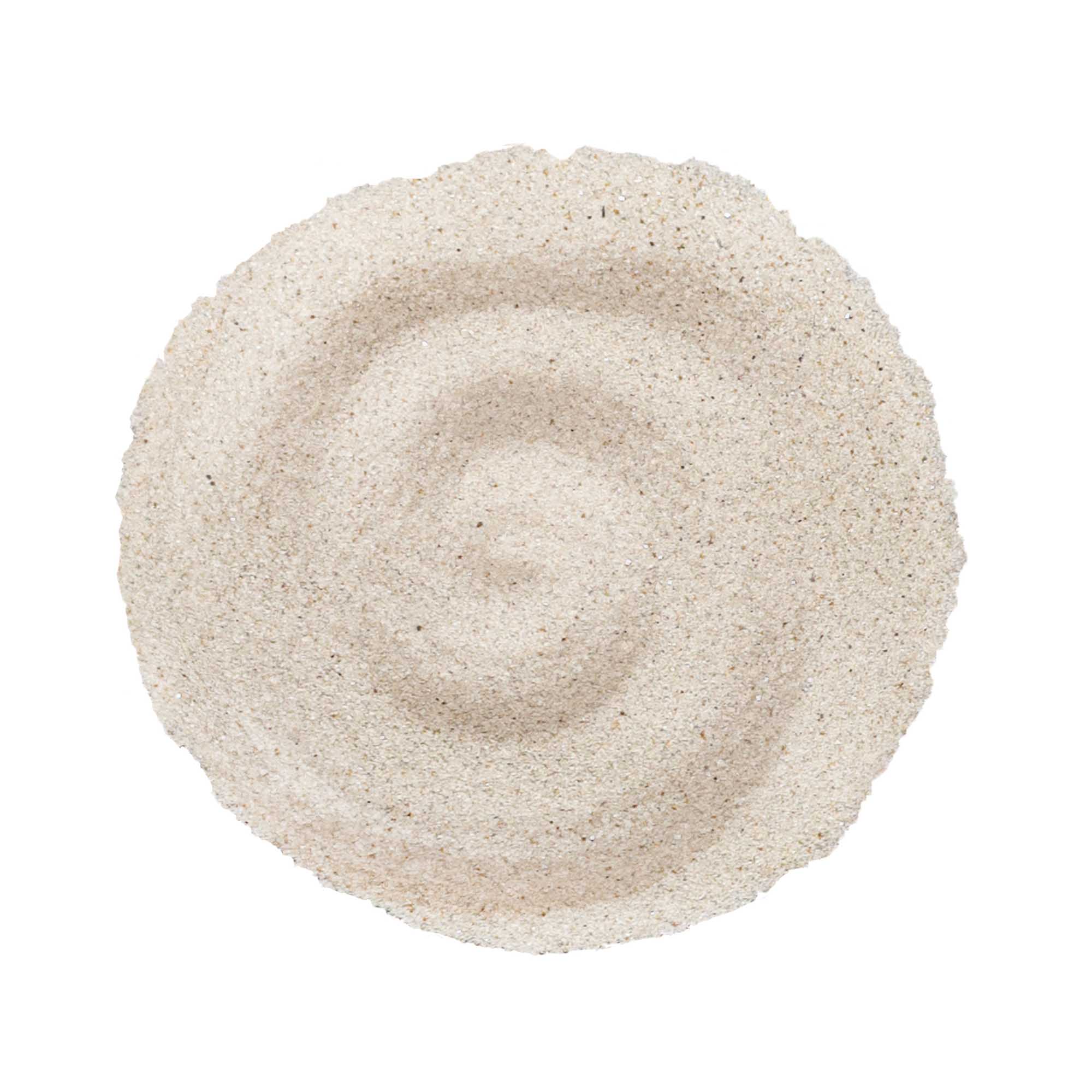
The 0–1 mm particle size of Dr.Soil Quartz Sand places it in the fine propagation grade — finer than decorative or coarse horticultural grit, but coarser and angularly shaped enough to create drainage pores in fine substrates without the compaction risk of very fine play sand. At this size, each grain is angular rather than rounded, a property that creates the stable, open pore structure between particles that improves drainage without cementing into a solid mass when wet.
This distinction is fundamental and frequently misunderstood. Builder’s sand and plaster sand are quarried materials that may contain calcium carbonate (lime) in quantities sufficient to raise soil pH significantly — a serious problem for acid-loving and carnivorous plants — as well as clay particles that compact into an impermeable mass when wet and dry out into a concrete-like layer. Play sand is typically very fine (often below 0.3 mm) and rounded; when mixed into a substrate it compacts between other particles and eliminates the drainage pores it was intended to create. Beach sand carries salt residues that accumulate in the root zone. Dr.Soil Quartz Sand contains none of these contaminants — it is specifically processed to remove them before reaching the gardener.
Dr.Soil Quartz Sand is designed for situations requiring a chemically neutral, fine-textured inorganic aggregate that improves drainage and physical stability without altering the chemical environment of the growing medium.
Dr.Soil Quartz Sand is processed to a minimum SiO&sub2; purity of 96%, with controlled limits on all oxide impurities:
The very low iron content (≤0.3% Fe&sub2;O&sub3;) accounts for the white-to-cream colour and confirms that this sand will not contribute mineral loading to the root zone — the property that makes it safe for carnivorous plants and sensitive seedlings that are harmed by any mineral enrichment.
Handle dry quartz sand in a well-ventilated area. Fine mineral dusts are a mechanical lung irritant at high concentrations. Moistening the sand before mixing significantly reduces airborne dust and is recommended as a standard precaution. This is a standard precaution for all fine mineral aggregates and does not affect the safety of the product in normal use.
| Application | Rate | Method |
|---|---|---|
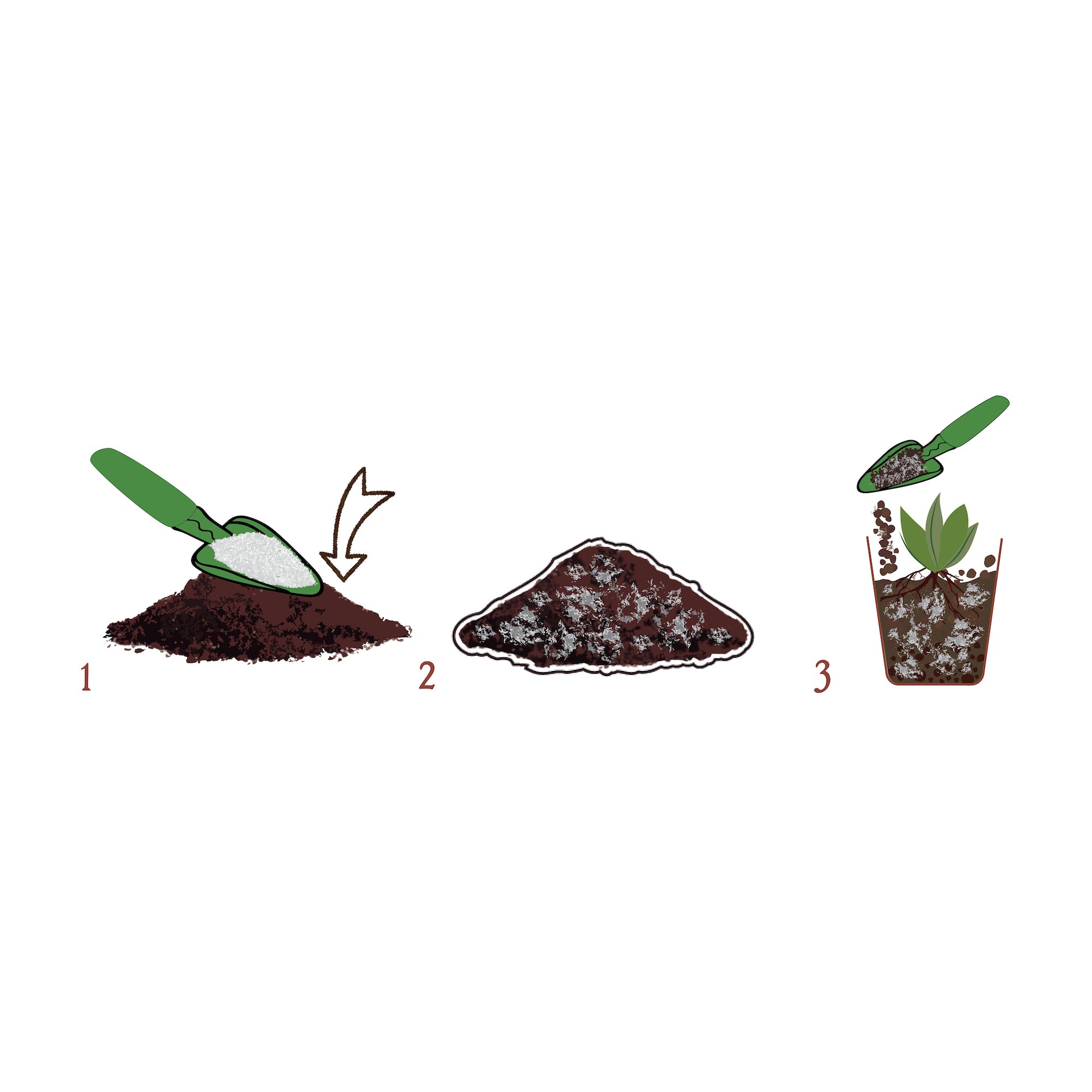
| Seed-sowing mix | 20–50% by volume | Blend with fine coir, vermiculite, or seed compost. Higher proportions suit succulents and cacti; lower proportions suit moisture-sensitive seedlings. The fine sand integrates invisibly while improving drainage and preventing surface capping. |
| Carnivorous plant mix | 50% by volume | The classic and most widely used formula: 50% washed quartz sand with 50% sphagnum peat. This sand is chemically pure enough for all carnivorous plant species. Use only with mineral-free irrigation water (rainwater, distilled, or reverse osmosis — never tap water). |
| Lawn topdressing | 2–5 kg per m² | Broadcast after scarification or core aeration and brush gently into the turf. The fine grade falls naturally into aeration channels. Repeat annually for progressive drainage improvement in compacted lawns. |
| Container stability | 15–30% by volume | Incorporate into the substrate of tall or top-heavy containers to increase weight at the base. Does not impede drainage when mixed evenly; the fine grade integrates fully into the substrate without creating a distinct compacted layer. |
| Decorative surface topdressing | 0.5–1 cm layer | Apply over the substrate surface of container plants or terrariums. Prevents soil splash during watering, suppresses surface algae, and provides a clean mineral aesthetic. Lasts indefinitely without degradation. |
Important — never substitute with: Builder’s sand (contains lime and clay), play sand (too fine — compacts into an impermeable mass), or beach sand (contains salt residues that accumulate in the root zone and harm sensitive plants). Always use washed, sieved, horticultural-grade quartz sand.
Quartz sand is a year-round amendment with no seasonal dependency. It is most useful when preparing new substrate blends in late winter or early spring, ready for the main sowing and potting season. For lawn topdressing, apply immediately after core aeration in spring or early autumn when the grass is actively growing. As a decorative surface layer, apply at any time when repotting or refreshing containers.
Store in the original sealed bag in a dry location. Quartz sand is completely stable in storage — it will not degrade, absorb moisture harmfully, or change its properties over any timescale. Keep the bag sealed to prevent contamination and minimise dust release when the bag is reopened.
Quartz sand is non-toxic, non-flammable, and presents no contact hazard under normal horticultural use. It is chemically inert and safe for edible crops, ornamentals, and aquatic or terrarium environments when properly washed.
Dr.Soil Quartz Sand — Washed & Sieved Fine Grade · Net volume: 1 litre · Particle size: 0–1 mm · Composition: ≥96% SiO&sub2; · pH: 6.8–7.0 (neutral) · Industrially washed & sieved · Lime-free · Clay-free · Safe for carnivorous plants