£5.49
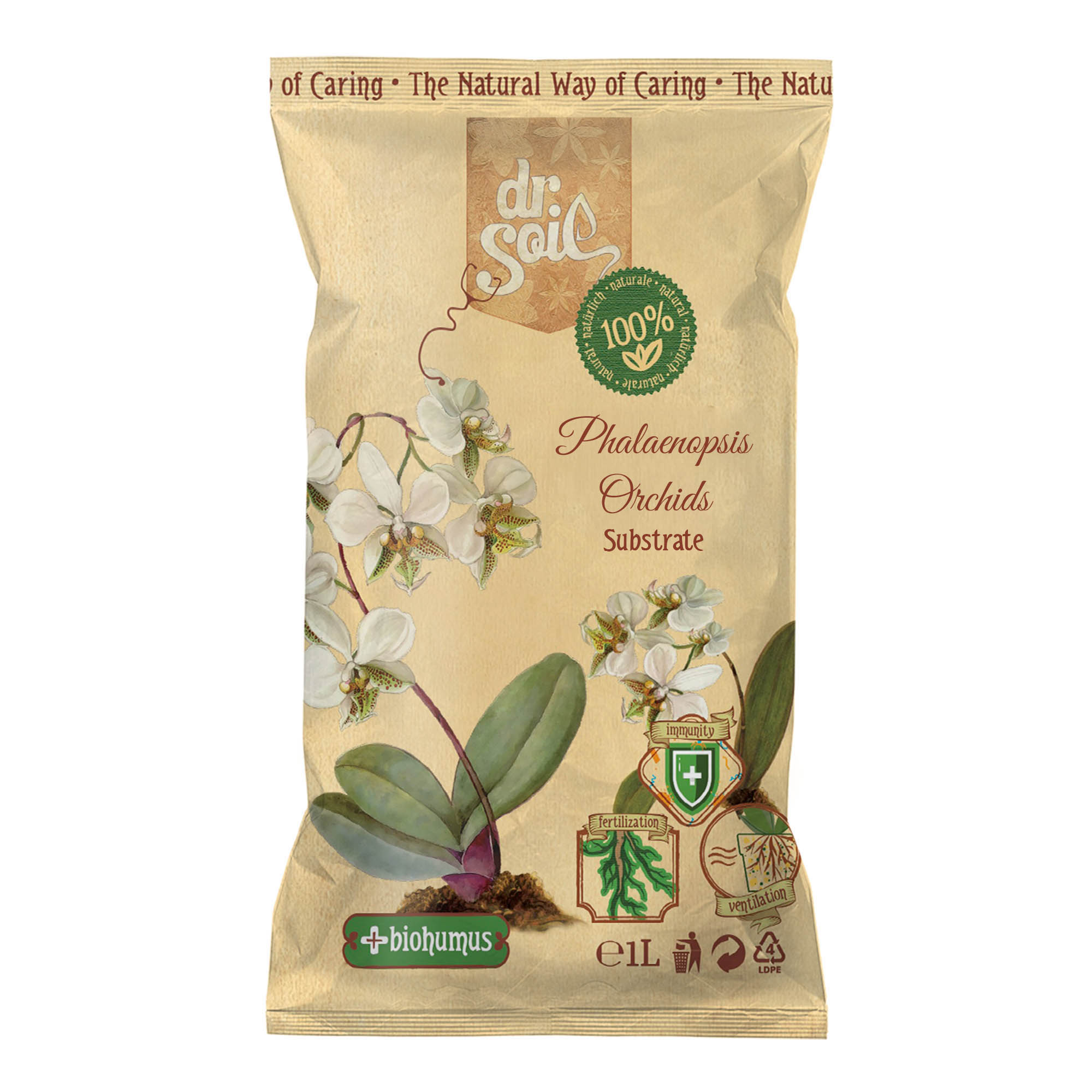
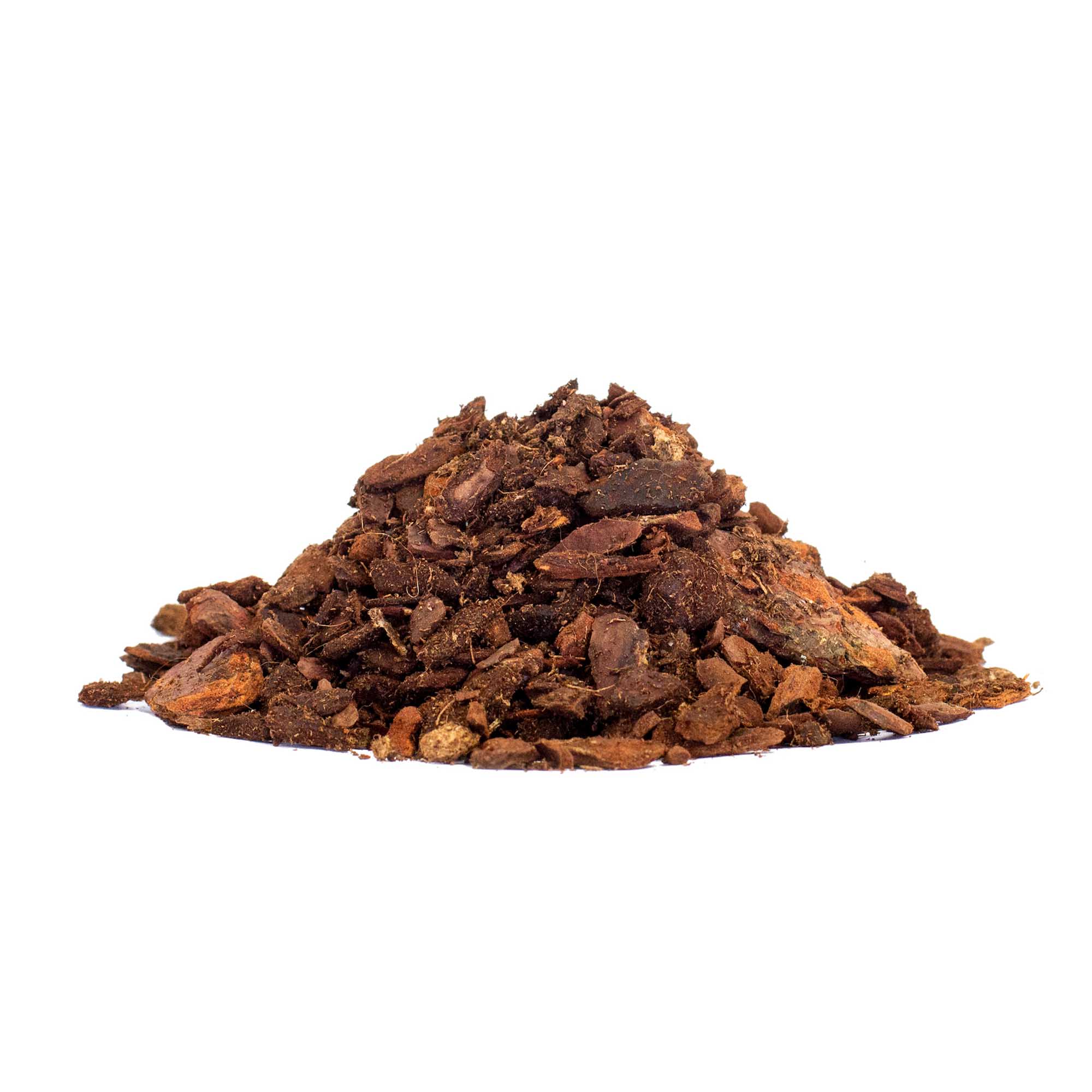
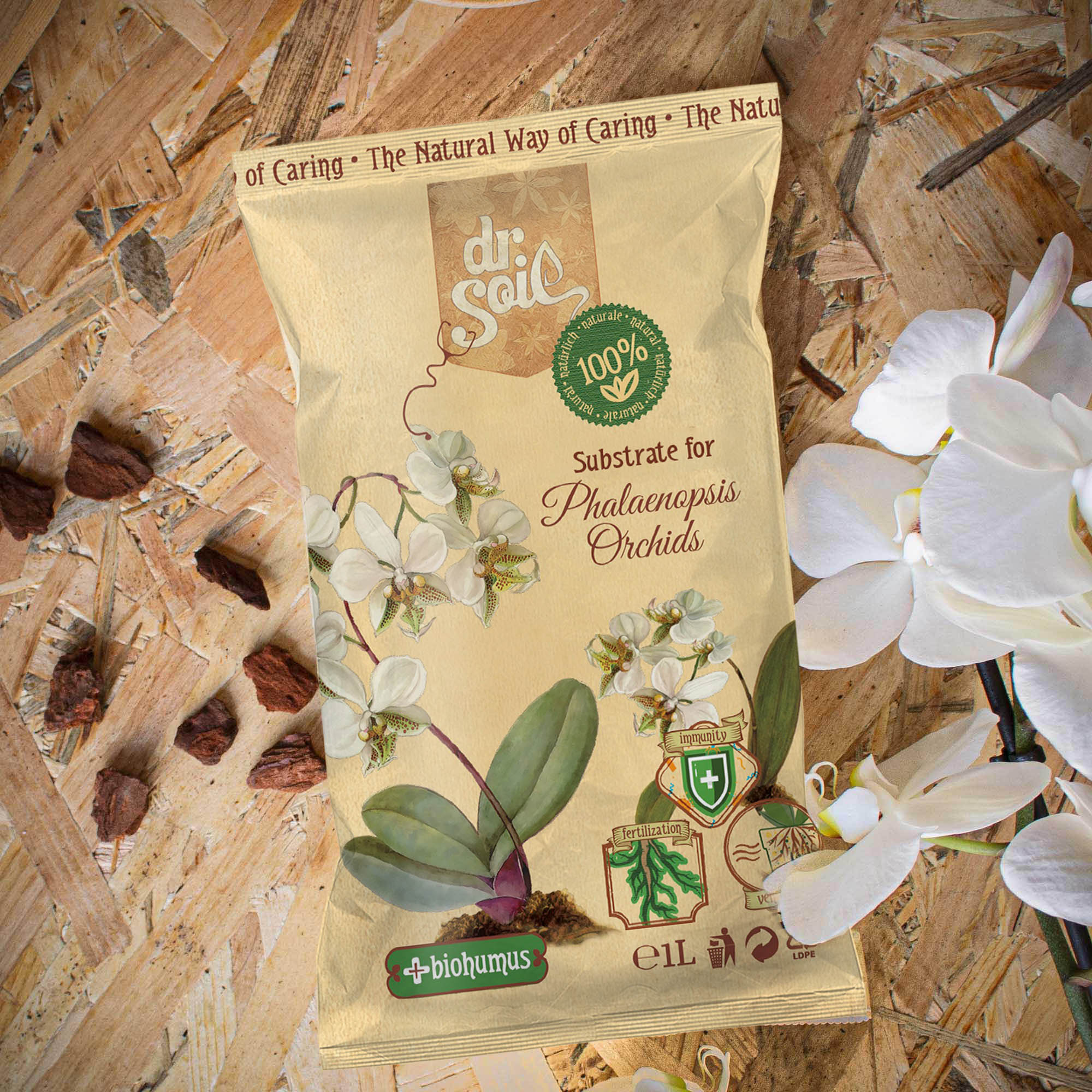
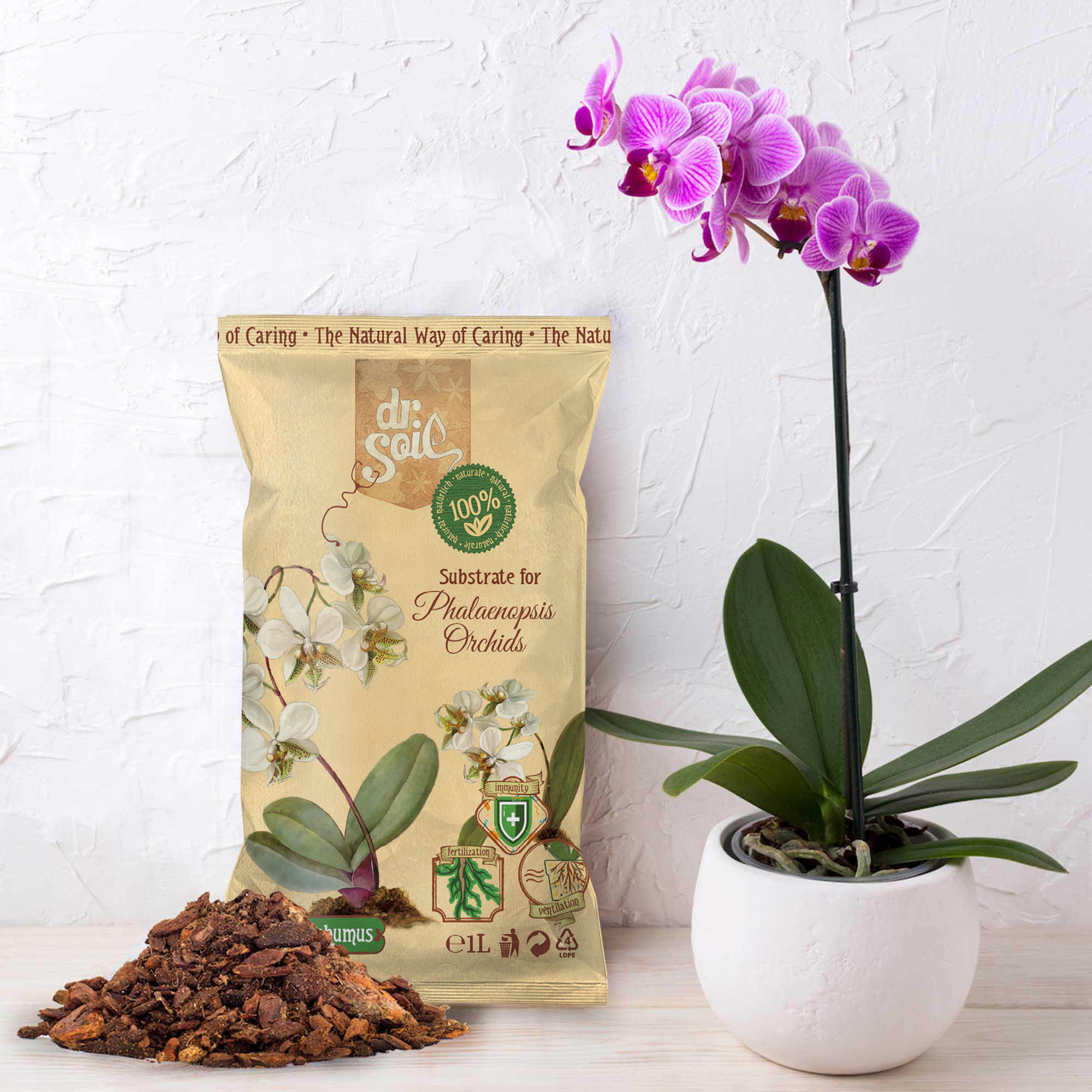
A specialist pre-fertilised growing medium formulated for Phalaenopsis and all epiphytic orchids with aerial roots — built on a foundation of coarse Mediterranean pine bark, coconut coir, and worm castings to provide the maximum root aeration, natural nutrition, and stress and disease resistance that epiphytic orchids require. Pre-fertilised for up to 6 months. pH 6.7.
The defining challenge of any Phalaenopsis substrate is reconciling two properties that are in fundamental tension: the roots must have continuous access to air (they are aerial roots adapted to atmospheric exposure, not soil burial), yet the substrate must retain enough moisture to hydrate a plant whose thick, succulent leaves cannot tolerate desiccation. Dr.Soil Phalaenopsis Substrate resolves this through three precisely chosen components:
Dr.Soil Phalaenopsis Substrate is formulated for all Phalaenopsis species and varieties — Phalaenopsis aphrodite, P. philippinensis, P. sanderiana, P. schilleriana, and all hybrid Phalaenopsis — as well as other epiphytic orchid genera with aerial root systems.
Phalaenopsis are native to the tropical forests of Southeast Asia, where they grow attached to tree branches and rocks rather than in soil. Their roots are exposed to alternating periods of heavy rainfall and rapid drying, and have evolved to absorb water quickly and release it equally quickly. This biology creates substrate requirements that are almost opposite to those of conventional potted plants:
The coarse pine bark creates the maximum root aeration that Phalaenopsis velamen roots require. The coir provides the moisture buffer that prevents desiccation between waterings. The worm castings deliver the gentle, consistent, biologically active nutrition that supports sustained growth, strong root development, and natural immunity. Together they create an environment that closely replicates the epiphytic conditions of the Phalaenopsis’s natural habitat in a convenient, ready-to-use format.
| Step | Action |
|---|---|
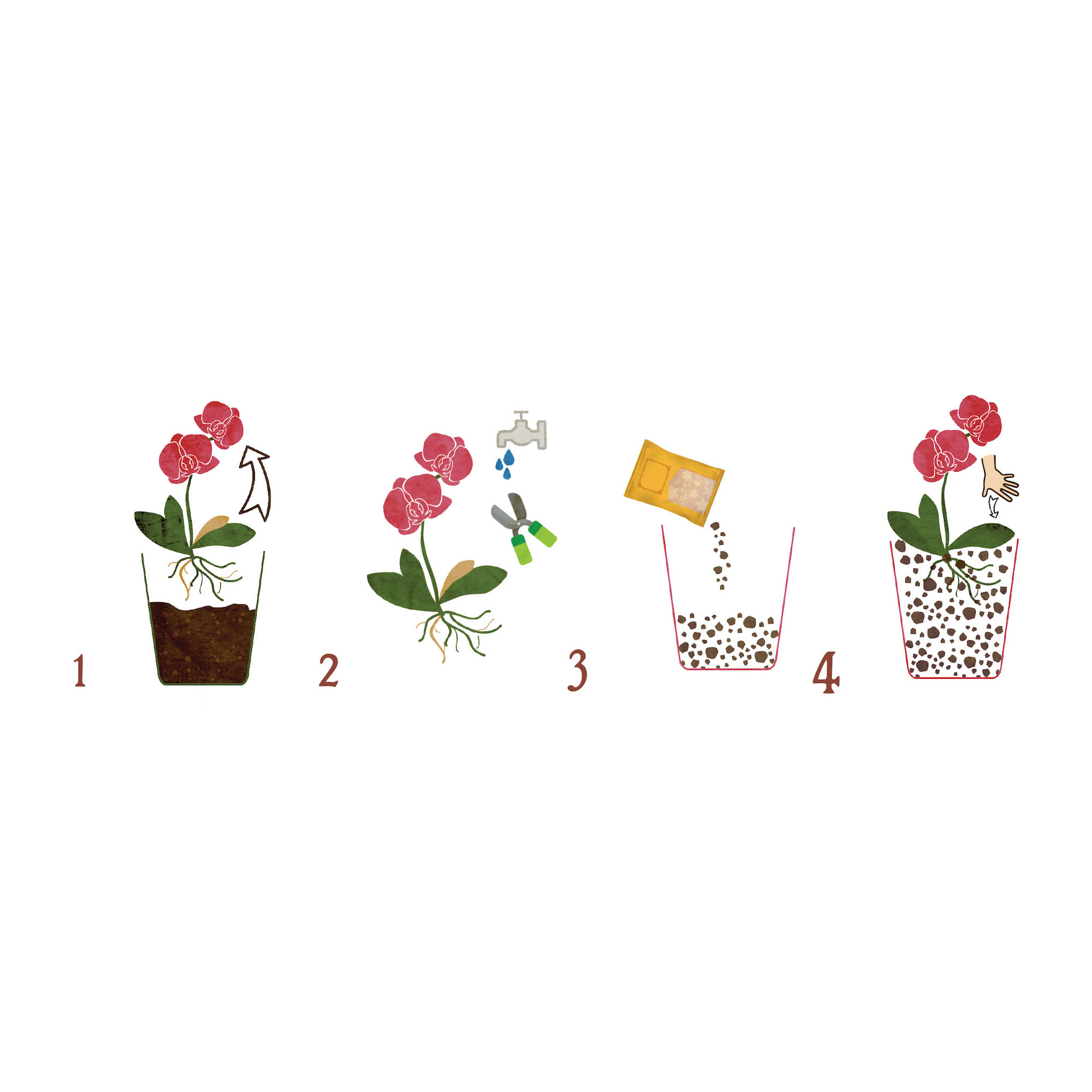
| 1. Choose the container | Select a specialist orchid pot — a clear plastic pot with multiple side drainage holes is ideal, as it allows you to monitor root health and colour. The pot should be proportionate to the root mass, not the foliage. A pot too large holds more moisture than the roots can manage. |
| 2. Prepare the plant | Remove all dead leaves and roots from the plant. Wash the roots gently with lukewarm water to remove all traces of the old substrate. Allow the roots to dry slightly before repotting — this allows any minor damage from the cleaning process to callus over. |
| 3. Fill and plant | Add a layer of substrate to the base of the new pot to maintain the plant at the same depth as previously. Position the plant and fill around the root mass with substrate, pressing gently and evenly. Work the substrate into all spaces around the roots without compacting it. |
| 4. First 7 days — do not water | Do not water for the first 7 days after repotting. This rest period allows the substrate to settle naturally and the roots to begin adapting to their new environment without the stress of immediate water exposure. |
| 5. Resume normal care | After 7 days, water normally by thoroughly soaking the substrate and allowing it to drain completely. Water again only when the roots turn silvery-grey, indicating the substrate has dried. No fertilisation required for 6 months. |
After flowering is the traditional and most recommended repotting moment for Phalaenopsis — after the flower spike has been removed, the plant enters a recovery and root-development phase during which the disruption of repotting is best tolerated. Repotting at this time gives the plant the maximum period to establish in fresh substrate before the next flowering cycle begins.
Every 1–2 years as routine maintenance. Pine bark gradually decomposes and compacts over time, losing the open structure that makes it effective. When the substrate begins to look dark, compacted, or no longer resembles chunky bark pieces, it is time to repot regardless of the plant’s visible condition.
When roots are unhealthy. Brown, mushy, or absent roots are a clear signal that the current substrate has failed — either through compaction, waterlogging, or exhaustion. Repotting into fresh Dr.Soil Phalaenopsis Substrate, combined with removal of all dead root material, gives the plant the best possible recovery environment.
When acquiring new plants. Most commercially available Phalaenopsis are sold in fine-textured peat compost or loose sphagnum that does not provide adequate long-term aeration for the roots. Repotting into appropriate substrate shortly after purchase dramatically improves long-term plant health.
Dr.Soil Phalaenopsis Substrate · Net volume: 1 litre · Pre-fertilised for up to 6 months · Ready-to-use · Composition: Mediterranean pine bark 8–25 mm, coconut coir, worm castings (vermicompost) · pH 6.7 · No synthetic fertilisers · No chemical additives