£16.99
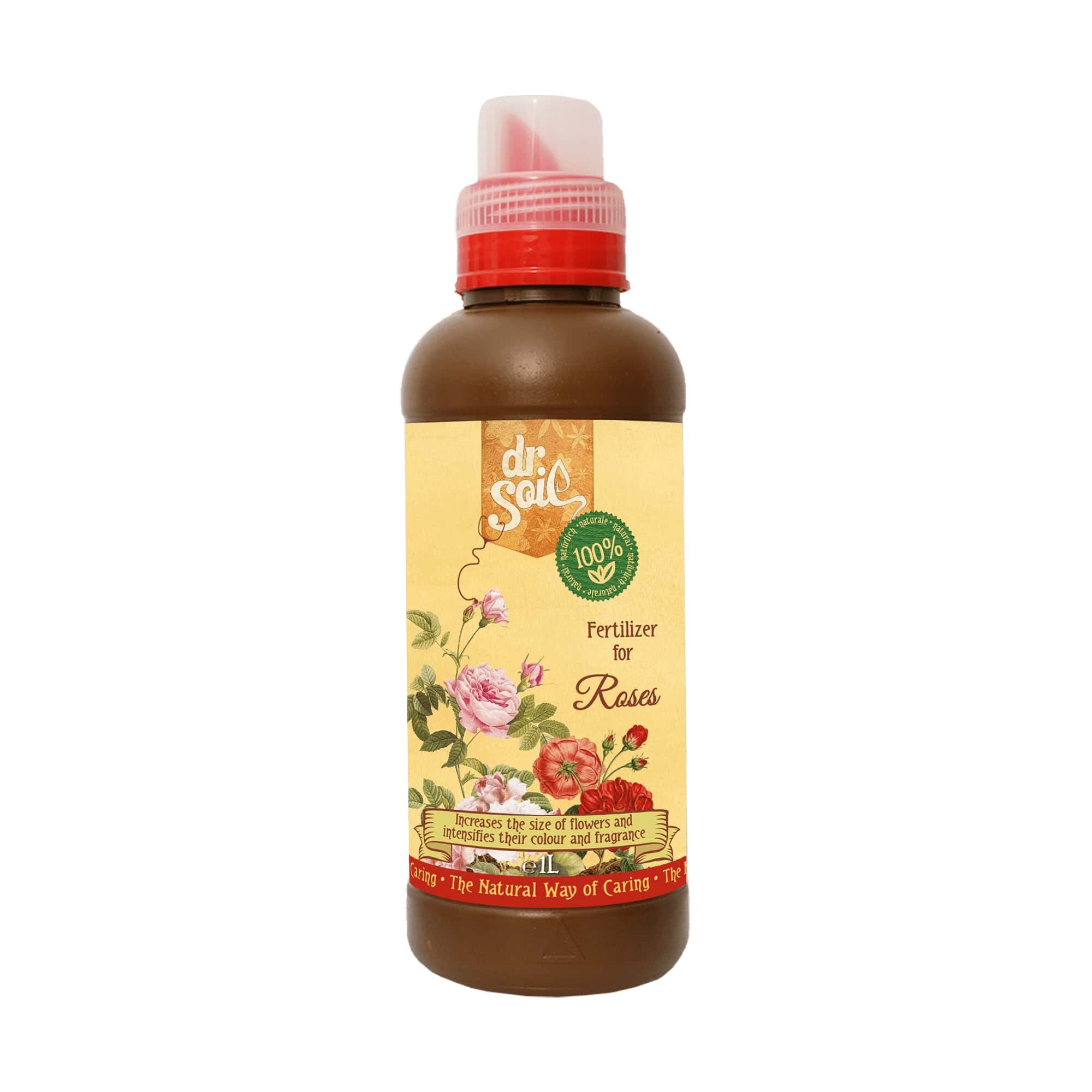
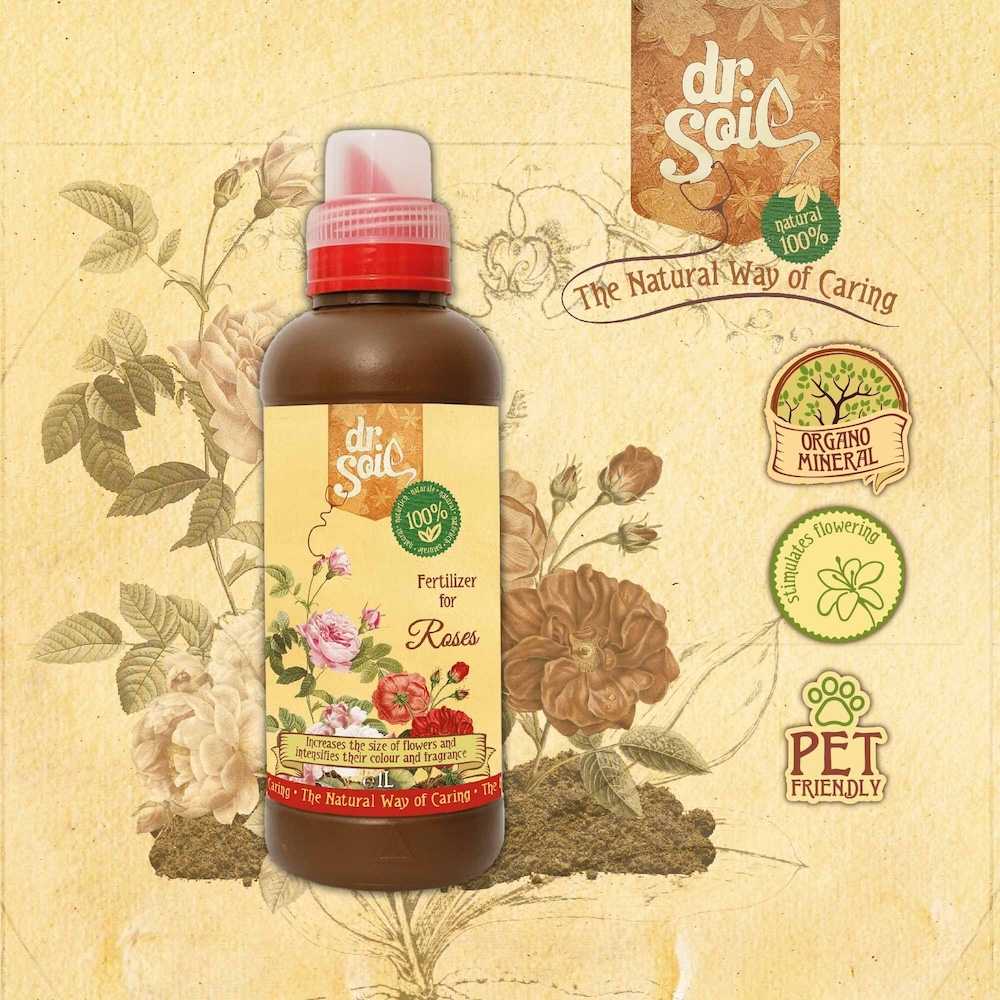
A liquid organic fertiliser formulated exclusively for roses and other flowering woody shrubs — combining hydrolysed proteins, potassium salts, natural calcium carbonate, and magnesium sulphate heptahydrate to deliver the complete nutritional profile that supports prolific repeat flowering, strong disease-resistant stems, deep fragrance, and the long-term structural health that roses require. pH 5.5–7.5. Supplied in a bottle made from ISCC PLUS certified plastic — free from fossil petroleum content.
Dr.Soil Organic Rose Fertiliser is the only formulation in the Dr.Soil range that incorporates natural calcium carbonate as a primary active component — a deliberate design decision that reflects the specific nutritional biology of roses. Roses are calcium-demanding plants: calcium is essential for cell wall construction, for the rigidity of flower stems and petals, for root cell elongation, and for activating the enzyme systems that govern the plant’s defence response against fungal pathogens. In the context of a rose that must produce new growth, new buds, and new flowers repeatedly through the season, a steady calcium supply is not a minor nutritional detail but a fundamental requirement. The calcium carbonate used in this formulation is of natural origin — not synthetic — and the slightly soluble form releases calcium progressively rather than as a single pH-spike event, making it safe for use around established plantings.
Hydrolysed proteins provide the free amino acid nitrogen that drives vigorous growth and flowering. Amino acids are absorbed directly by root cells without microbial conversion, providing immediate nutrition during the most demanding phases of the rose’s growth cycle. The amino acid profile also directly supports the biosynthesis of the aromatic compounds that give rose flowers their characteristic fragrance — a quality that is reduced by conventional synthetic fertilisers and enhanced by amino acid-based organic nutrition.
Potassium salts support the transport of photosynthates to developing buds, improve the firmness and longevity of flowers after opening, and enhance the rose’s natural resilience to the temperature extremes and disease pressure that are common in outdoor cultivation. Magnesium sulphate heptahydrate provides magnesium for chlorophyll synthesis — supporting the deep, glossy green foliage that is the background against which rose flowers perform — and sulphur, which contributes to the sulphur-containing amino acid and enzyme systems involved in the rose’s natural disease resistance, particularly against black spot and mildew.
The bottle is produced from plastic certified to the ISCC PLUS standard (International Sustainability and Carbon Certification) — an independently audited European certification guaranteeing the plastic is derived from renewable or recycled feedstocks rather than fossil petroleum. No virgin fossil-derived plastic content. Chain-of-custody traceability verified at every production stage.
This formulation is designed primarily for roses of all types: hybrid tea roses, floribundas, climbers, ramblers, shrub roses, English roses (David Austin), miniature roses, ground cover roses, and old garden roses. It is also appropriate for other flowering woody shrubs with comparable nutritional requirements: clematis, wisteria, jasmine, and other vigorous repeat-flowering climbers and wall shrubs.
Roses are among the most rewarding and most nutritionally demanding plants in the garden. Their combination of vigorous woody growth, continuous repeat flowering from June to November, and susceptibility to a range of fungal diseases creates a nutritional profile unlike any other common garden plant:
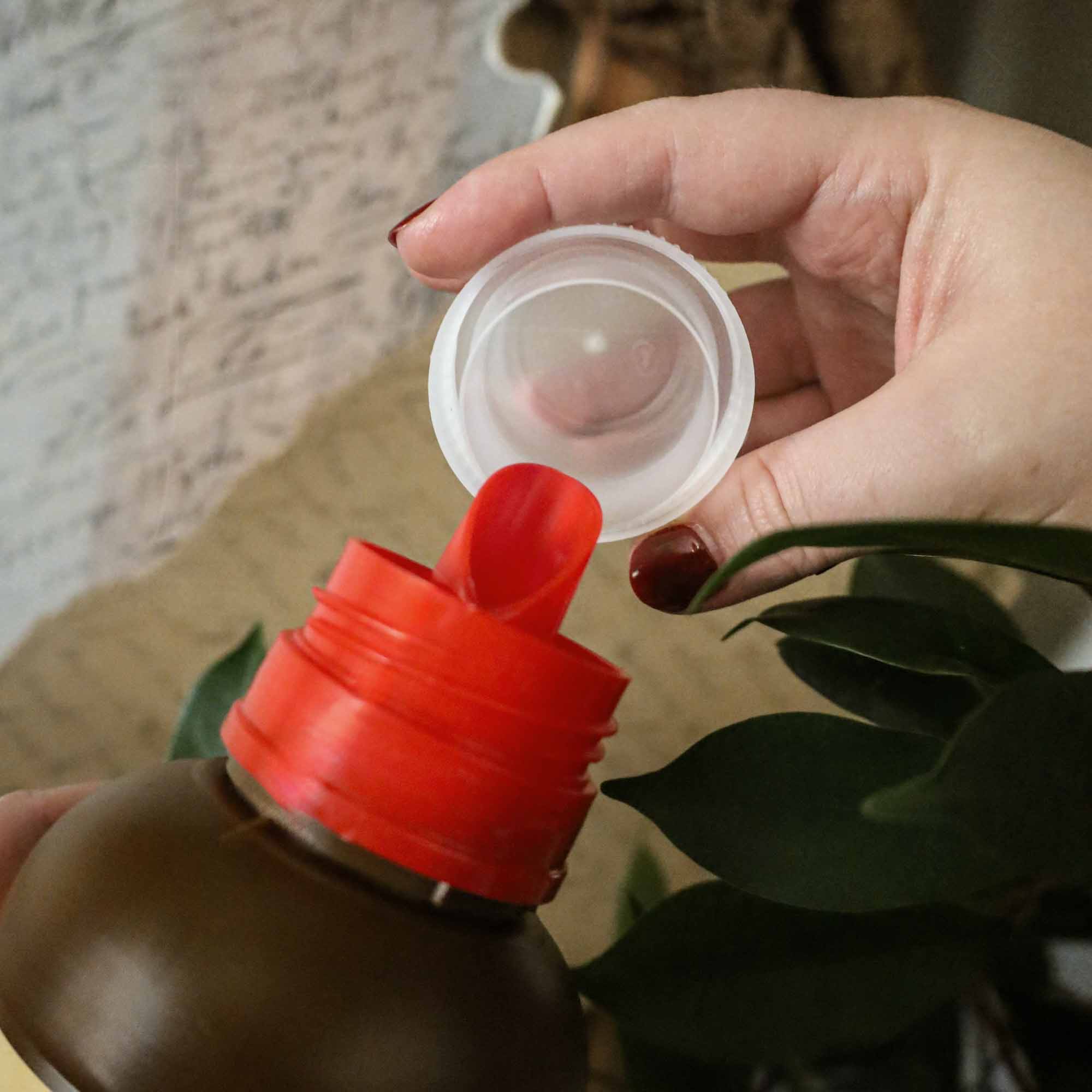
Dilute 40 ml of concentrate per 1 litre of water. Mix thoroughly. Apply to moist soil — never to dry roots. Apply as a soil drench around the base of the plant, extending to the drip line of the canopy where feeder roots are concentrated. Avoid wetting the foliage during application if black spot or mildew is active, as wet foliage in the evening can promote fungal spread.
| Application | Dilution | Frequency & timing |
|---|---|---|
| Spring start (leaf emergence) | 40 ml per 1 L water | First application when leaves begin to unfurl in early spring; provides the nutrition for the first flush of growth and the first flowering cycle |
| During active growth and flowering | 40 ml per 1 L water | Every 2 weeks from April through September; the most important feeding period for repeat-flowering varieties |
| Between flowering flushes | 40 ml per 1 L water | Apply immediately after deadheading to support rapid recovery and the initiation of the next flowering cycle |
| Container roses | 40 ml per 1 L water | Every 10–14 days; container-grown roses exhaust their growing medium significantly faster than garden specimens |
Stop feeding after early September to allow new growth to harden before the first frosts. Late-season nitrogen stimulates soft growth that is vulnerable to winter damage.
Classified as non-hazardous under EU Regulation (EC) No. 1272/2008 (CLP). Non-flammable and non-explosive. Store in the original sealed bottle between 5°C and 25°C, away from children. Avoid prolonged skin contact; wash hands after use. If contact with eyes occurs, rinse thoroughly with clean water. Do not ingest. Do not allow to enter drains or surface watercourses.
Dr.Soil Organic Rose Fertiliser · Net volume: 1 litre · Active components: hydrolysed proteins, potassium salts, natural calcium carbonate, magnesium sulphate heptahydrate · pH 5.5–7.5 · Dilution: 40 ml per litre · ISCC PLUS certified bottle · Fossil petroleum-free packaging