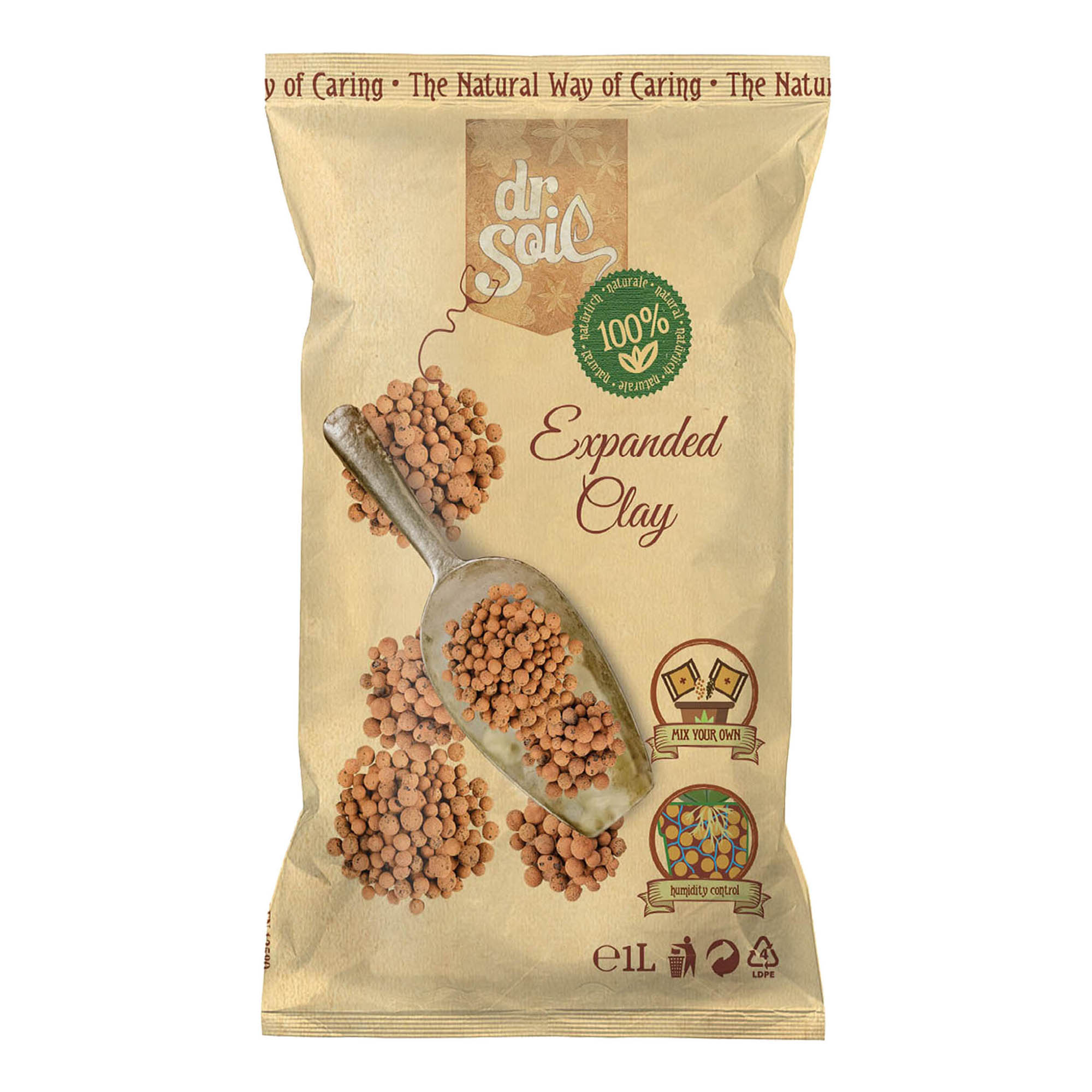
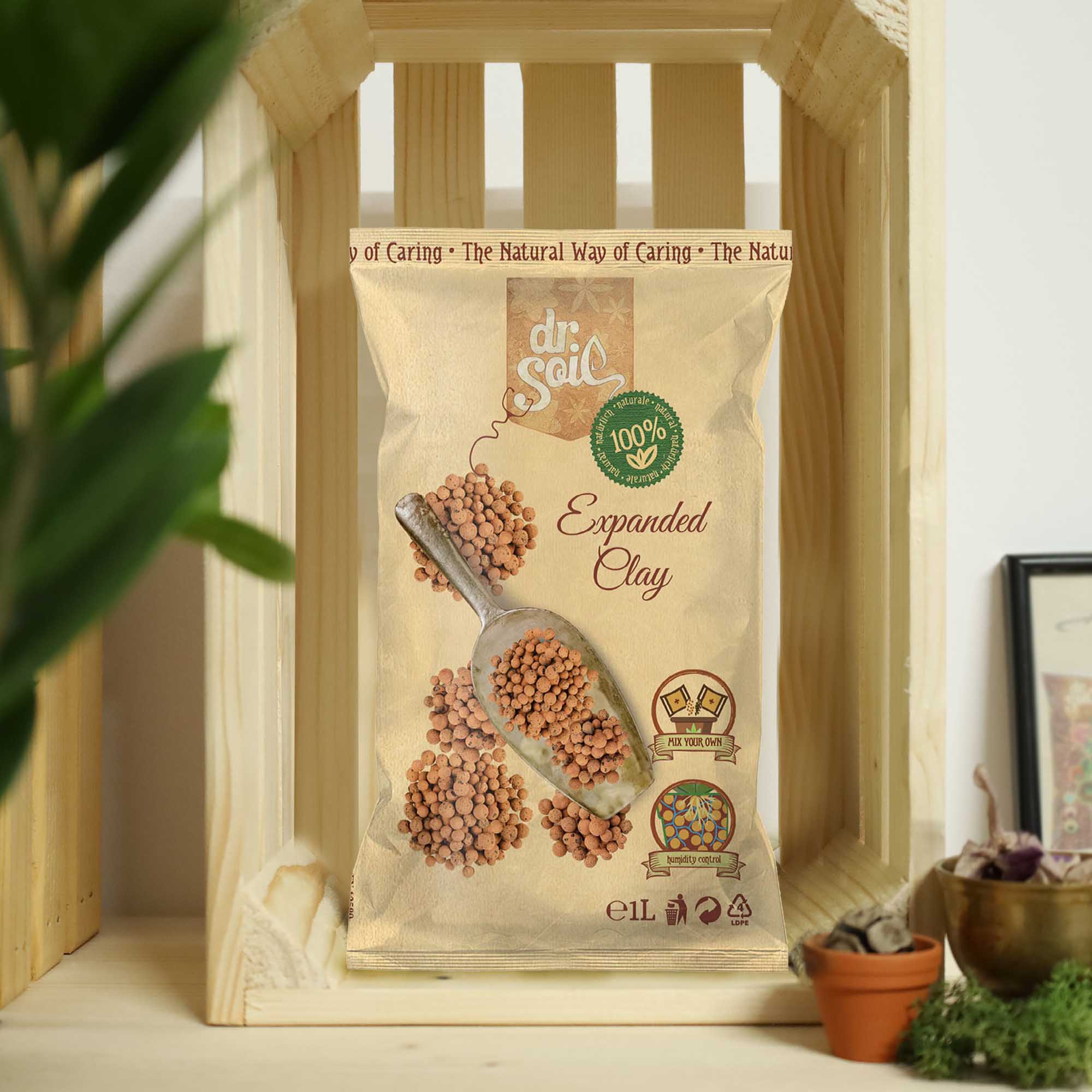
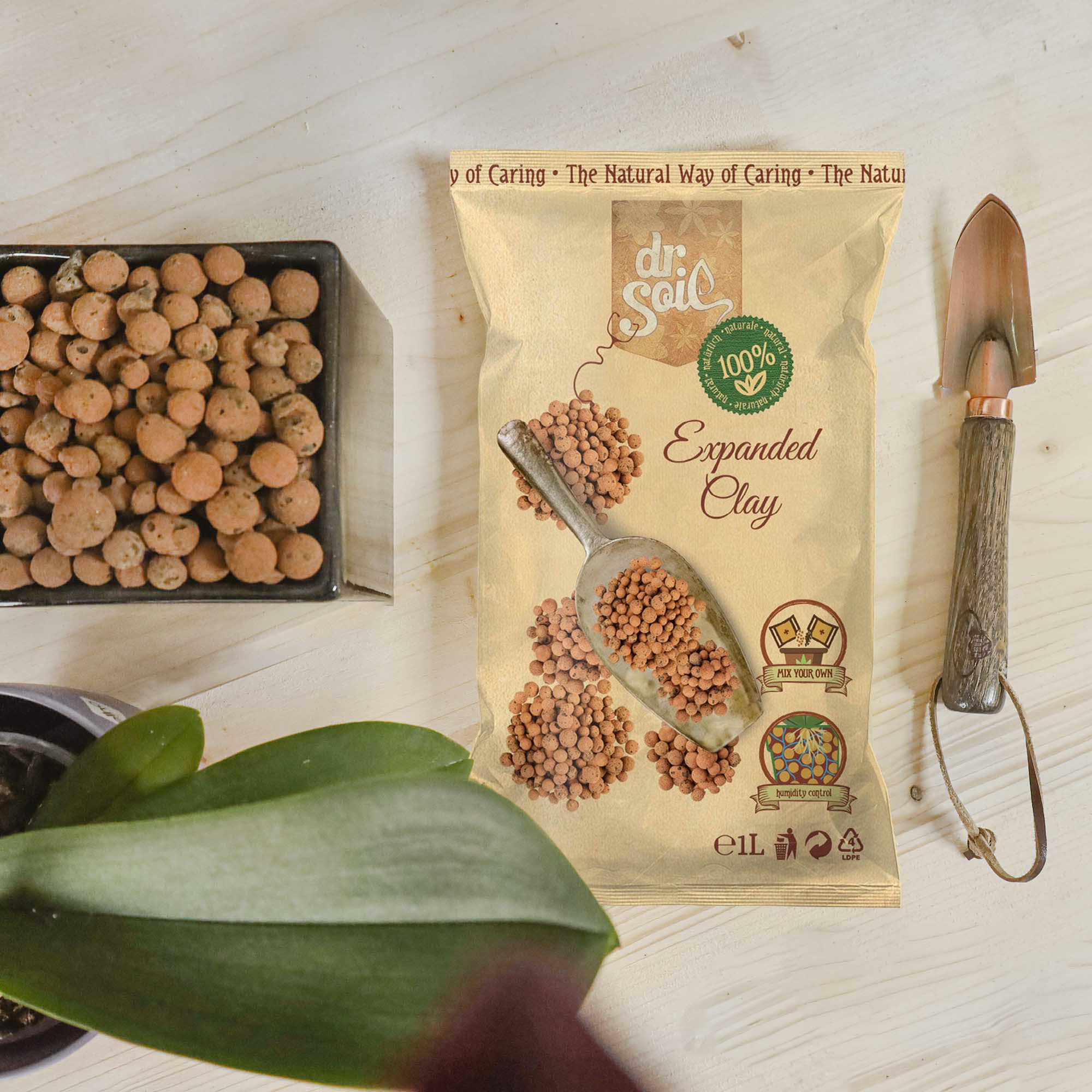
Dr.Soil Keramzite for drainage and hydroponics provides an effective and environmentally friendly solution for plant care.
£5.49
Premium Lightweight Expanded Clay Aggregate (LECA) produced from natural clay fired at approximately 1,200°C — a hard ceramic granule with a highly porous interior that provides permanent drainage, root aeration, and structural stability in any growing medium. pH neutral, sterile, reusable indefinitely.
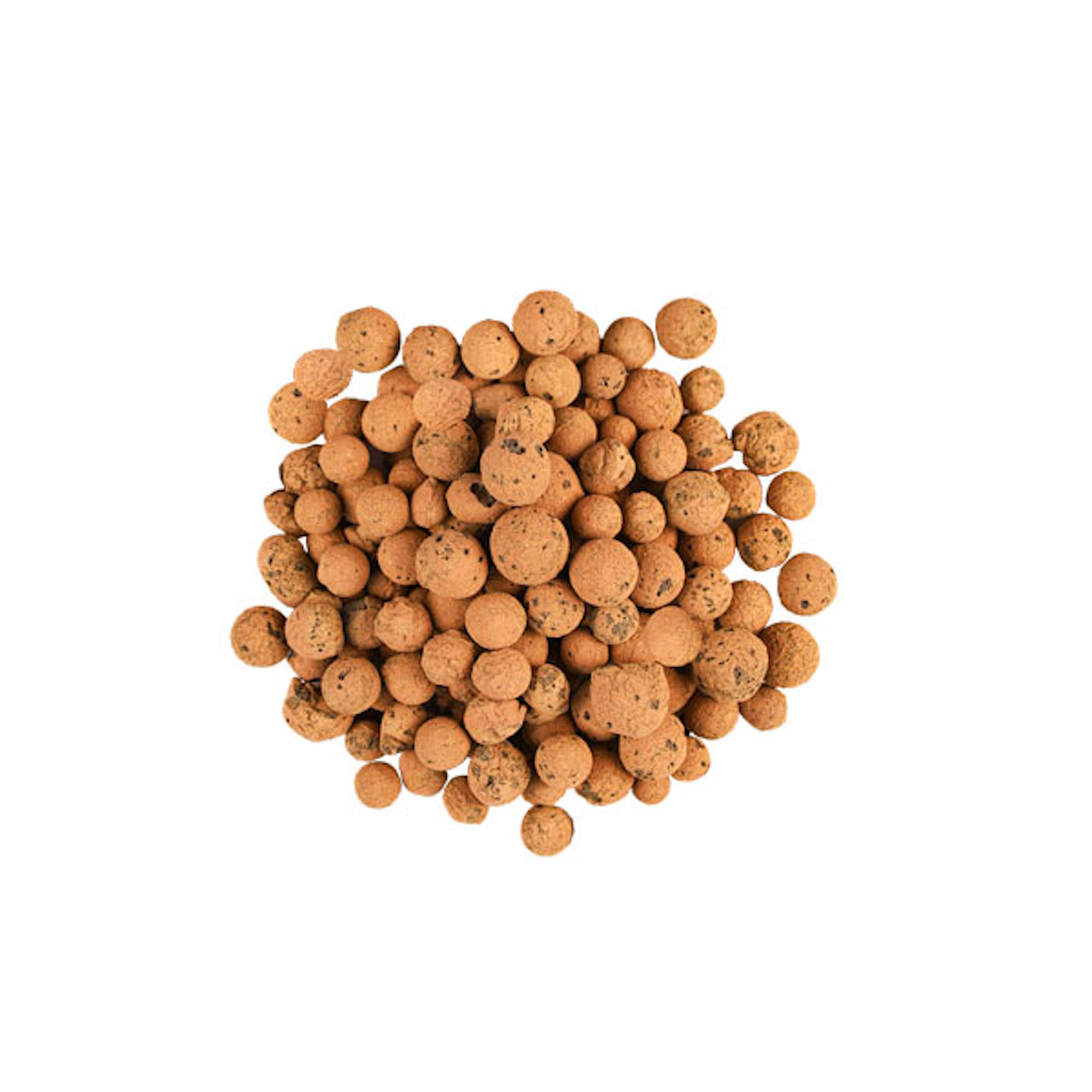
Expanded clay is produced from natural clay ore fired in a rotary kiln at approximately 1,200°C. At this temperature, the clay expands and forms a hard, sintered ceramic shell surrounding a highly porous, gas-filled interior. The result is a lightweight granule that is simultaneously structurally robust (it will not crush under normal potting pressure) and internally porous (the inner network of voids holds moisture whilst the granule surface and inter-granule spaces drain freely).
This dual character — retaining moisture inside, draining freely between granules — is what makes expanded clay uniquely versatile. It functions effectively as a drainage layer at the base of containers, as a structural aggregate in potting mixes, as a standalone hydroponic growing medium, and as a decorative topdressing. Most importantly, unlike organic substrate components that compact and decompose, expanded clay maintains its structure and properties permanently.
The 4–8 mm particle size is the universal horticultural grade for expanded clay. Granules smaller than 4 mm can compact over time and reduce drainage; granules larger than 8 mm leave inter-particle spaces too large for fine roots to bridge. At 4–8 mm, the expanded clay maintains the optimum balance between inter-particle air space, capillary moisture retention, and root-contact surface area across the full range of horticultural applications.
Dr.Soil Expanded Clay is designed for situations where permanent structural drainage and root aeration are the primary requirements — whether as a standalone medium or as a component of a mixed substrate.
Rinse Dr.Soil Expanded Clay thoroughly in clean water before first use to remove surface dust from production and transport. Soaking for 6–12 hours pre-hydrates the internal pores and improves moisture retention from the first watering.
| Application | Rate | Method |
|---|---|---|
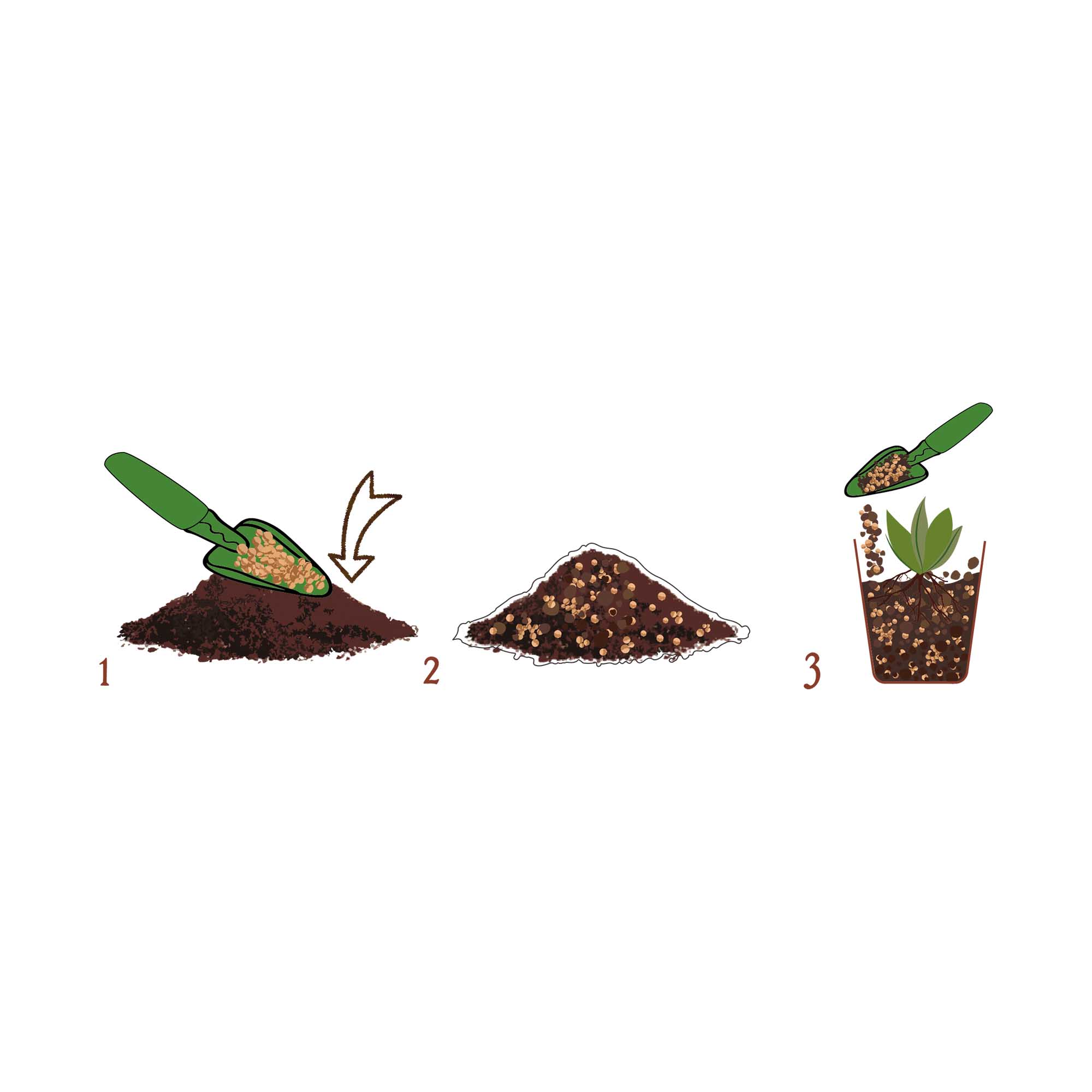
| Drainage layer | 2–4 cm at base of container | Place in the bottom of any pot or container before adding the main growing medium. Ensures excess water drains freely away from roots regardless of the substrate above. |
| Potting mix amendment | 10–30% by volume | Blend evenly with compost, coir, or other substrate components. Higher rates suit plants that need sharp drainage; lower rates for moisture-loving species. Rinse before mixing. |
| Hydroponics and semi-hydroponics | Fill container | Fill the growing container with rinsed and pre-soaked expanded clay. Water with a balanced nutrient solution. Rinse and sterilise between growing cycles. |
| Orchid substrate | 30–50% by volume | Combine with coarse bark and perlite for a well-draining, open orchid medium. The expanded clay provides structural stability and moisture buffering that bark alone cannot achieve. |
| Decorative topdressing | 1–2 cm surface layer | Apply over the substrate surface of container plants. Suppresses surface algae, prevents soil splash during watering, and retains warmth around the stem base. Reapply if displaced by heavy watering. |
Reuse instructions: After each growing cycle, soak used expanded clay in a dilute sterilising solution (hydrogen peroxide or bleach, thoroughly rinsed) or autoclave. Allow to dry fully before reuse. Granules that have crumbled or lost their structure should be replaced, though this is rare under normal conditions.
Expanded clay is a permanent structural component with no seasonal constraints. It is most effective when incorporated at potting or repotting, when it can be properly mixed into the growing medium or laid as a clean drainage layer at the base. For hydroponics, set up your system in spring to take full advantage of the longer days ahead. As a topdressing on container plants, apply at any time — it will remain effective and attractive indefinitely without replacement.
Store in the original sealed bag in a dry location. Expanded clay is completely stable in storage — it will not degrade, absorb moisture harmfully, or change its properties over any timescale. Keep dry between uses to prevent pre-loading of the internal pore network before incorporation.
Expanded clay is non-toxic, non-flammable, and presents no health or environmental hazard in normal horticultural use. The ceramic granules are dust-free under normal handling conditions; however, crushing or grinding should be avoided as fine ceramic dust is an inhalation irritant.
Dr.Soil Expanded Clay — Premium LECA Granules · Net volume: 1 litre · Particle size: 4–8 mm · pH neutral · Sterile · Reusable indefinitely · Fired at ~1,200°C · No chemical treatment