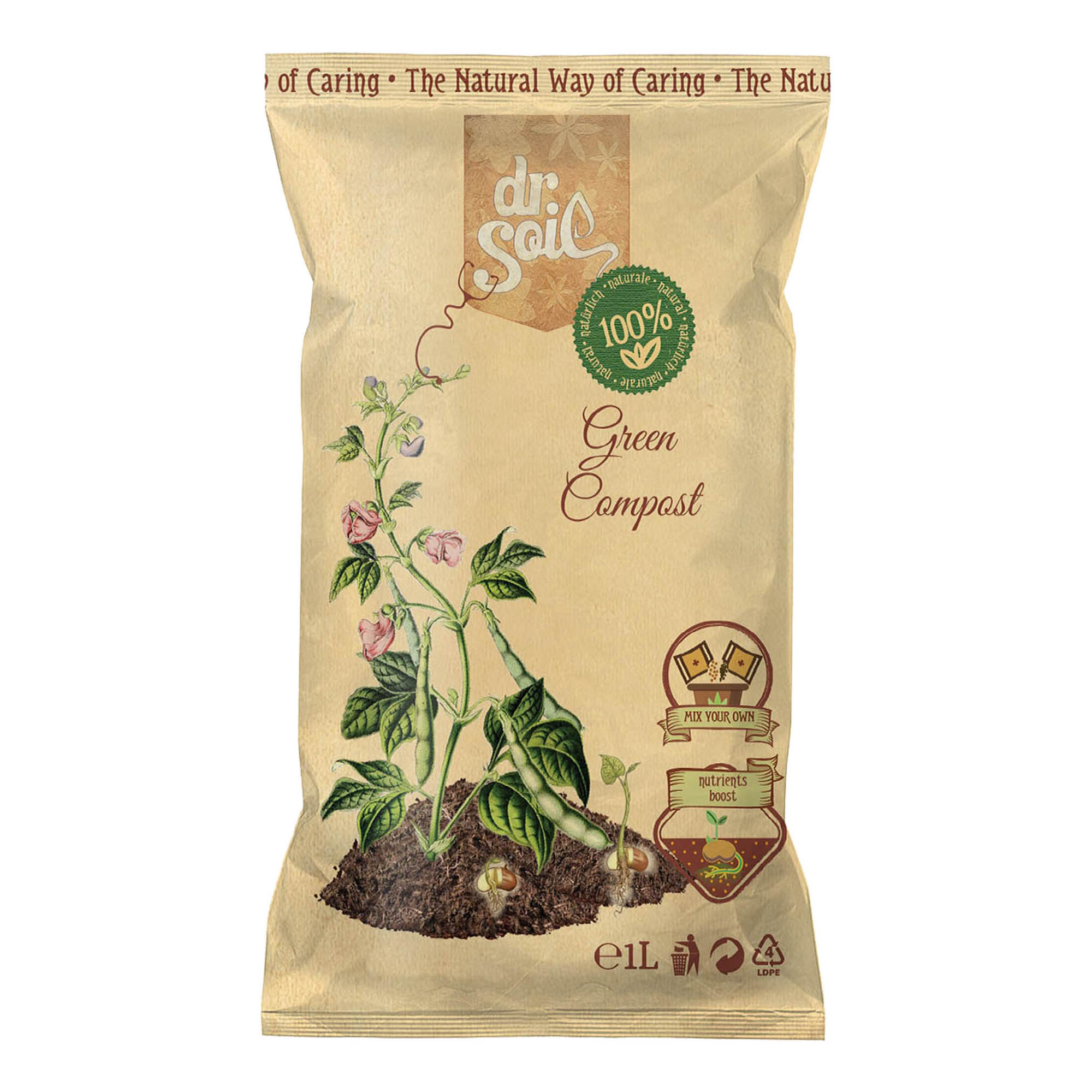
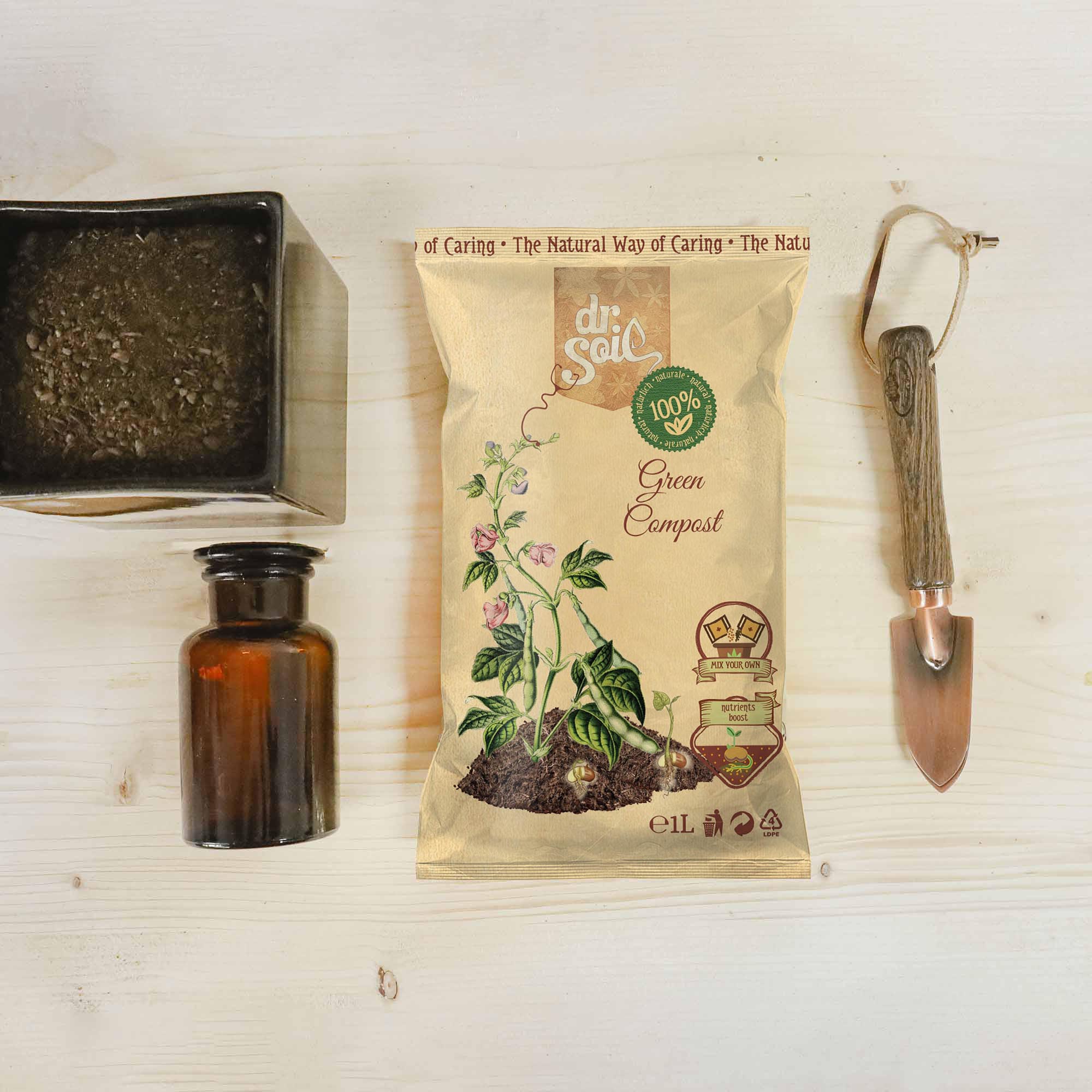
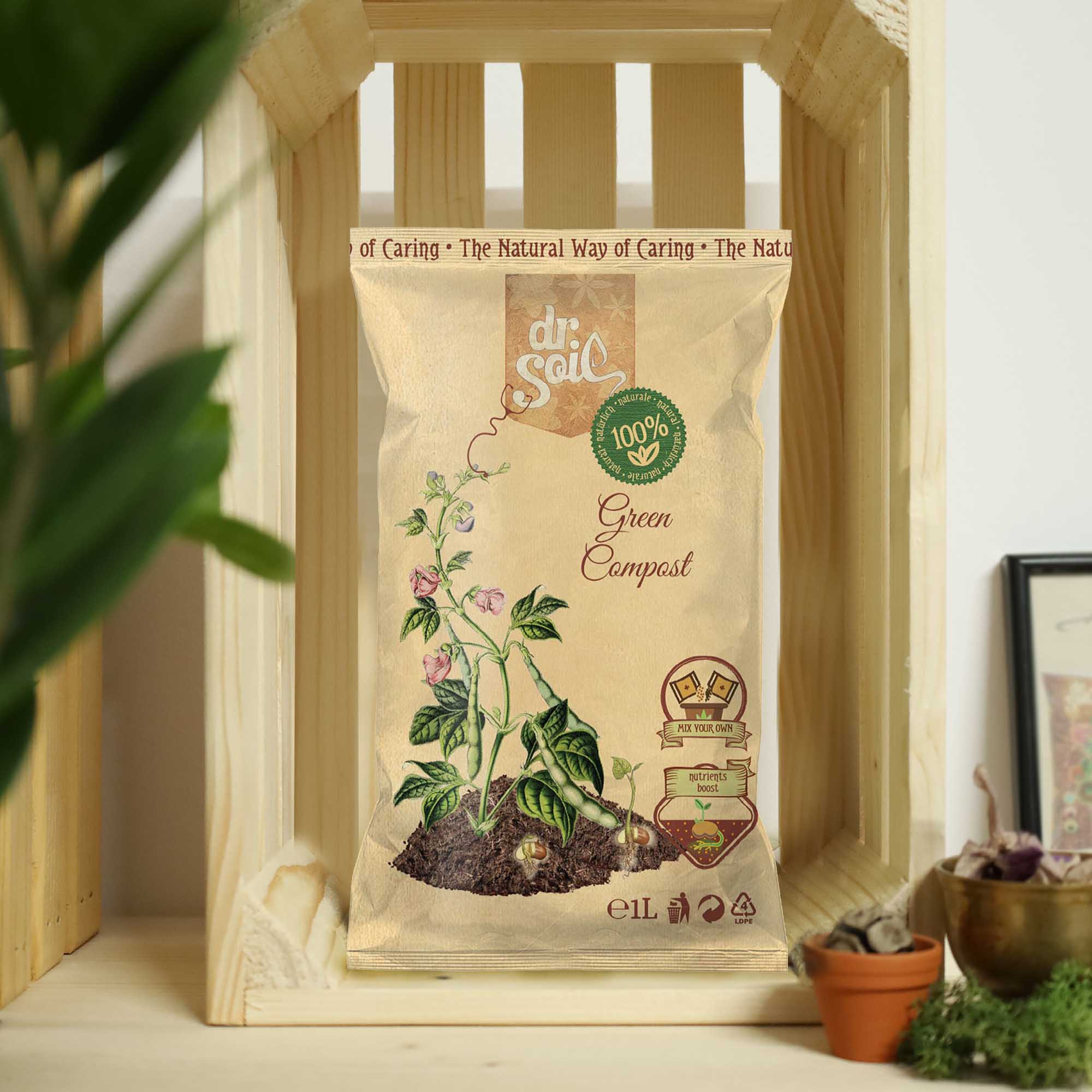
Dr.Soil Organic Compost is the ideal solution to feed your plants and keep your soil nutrient-rich, supporting them to grow beautiful and healthy.
£4.99
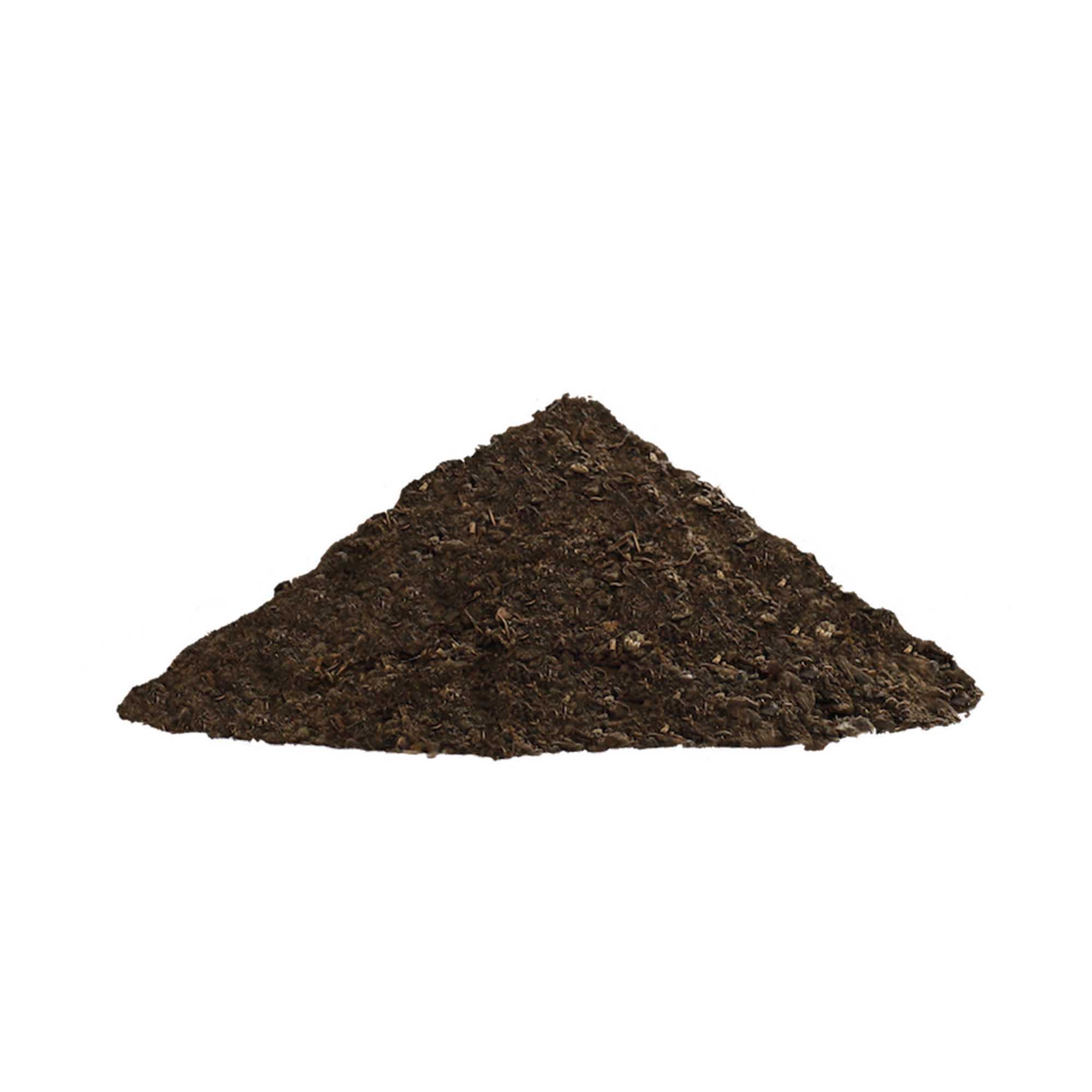
Fully matured green compost produced from plant material, laboratory tested for quality and maturity, and finely sieved to a uniform, crumbly texture. Peat-free and produced from renewable plant material. Feeds the soil food web, improves structure, retains moisture, and builds long-term fertility with every application.
Dr.Soil Green Compost is produced from green vegetable matter — lawn clippings, leaves, hedge trimmings, and plant residues — processed through a controlled aerobic composting cycle that generates sufficient heat to eliminate weed seeds and pathogens, break down complex organic molecules into plant-available forms, and stabilise the final material into fully mature humus. The compost is laboratory tested for maturity and heavy metal content before being finely sieved to produce a uniform, consistently textured product.
The critical distinction between green compost and an immature or unstabilised material is the carbon-to-nitrogen (C:N) ratio. In fresh or partially composted material, the C:N ratio is high and microbial activity focused on decomposition will tie up available nitrogen from the surrounding soil — actually depriving plants of nitrogen in the short term. Dr.Soil Green Compost is fully matured to a stable C:N ratio, which means it releases nutrients rather than locking them up, and supports rather than competes with the soil food web from the moment of application.
Synthetic fertilisers supply NPK in soluble form — immediately available to plants but equally immediately vulnerable to leaching, and providing nothing for soil structure or biology. Green compost feeds the soil rather than the plant: it supplies slow-release nutrition that is metered out by microbial activity rather than dissolving with the first rainfall; it improves the physical structure of both clay and sandy soils; it introduces and sustains the biological community — bacteria, fungi, actinomycetes, protozoa — that drives the natural nutrient cycling on which all healthy soil depends. These benefits compound over time, making each application more effective than the last.
Dr.Soil Green Compost is designed as the organic foundation component of any growing medium — the ingredient that provides nutrition, structure, biological activity, and moisture retention simultaneously.
| Application | Rate | Method |
|---|---|---|
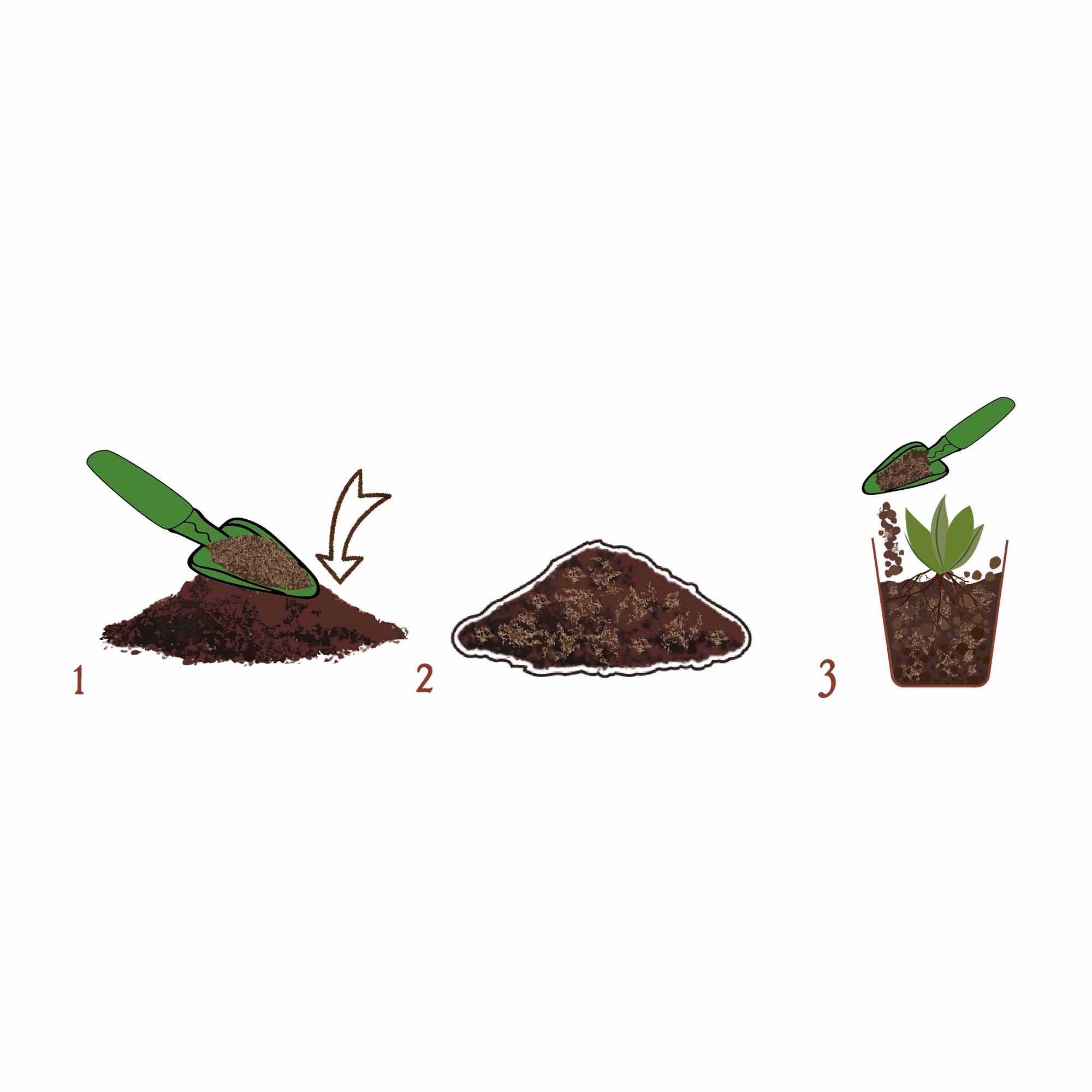
| Potting mix ingredient | 20–30% by volume | Blend evenly with structural amendments such as perlite, expanded clay, or vermiculite. Use as the organic foundation of any homemade peat-free container substrate. Do not exceed 30% for drainage-sensitive plants. |
| Garden bed annual top-up | 3–5 cm surface layer | Spread over the bed surface and work into the top 15 cm with a fork each spring before planting. The most effective way to progressively build long-term soil fertility. |
| Surface mulch | 3–5 cm layer | Apply around established plants and trees, keeping clear of stems and crowns. Retains moisture, suppresses weeds, and feeds the soil as it decomposes over the growing season. |
| Compost tea | 1:5 compost to water | Steep in non-chlorinated water for 24 hours, stirring occasionally. Strain and apply as a soil drench at the base of plants. Use immediately after steeping for maximum microbial activity. |
| New lawn preparation | 5–10 cm layer | Work into the top 15 cm of subsoil before seeding or laying turf. Dramatically improves establishment rate and long-term sward quality on poor or compacted ground. |
Important: Do not use as a standalone seed-sowing medium — the nutrient concentration is too high for germinating seeds and may cause damping off. Blend with a neutral substrate (coir, vermiculite, or perlite) at no more than 20% for propagation and germination mixes.
Green compost is most effective applied in early spring, before planting begins, when it has the full growing season ahead to release its nutrients and improve soil structure. A second application in autumn, after the growing season, feeds soil organisms through the winter months and ensures the bed is in peak condition by the following spring. As a potting mix ingredient, use at any time of year when preparing fresh containers or repotting. The most important principle is consistency: annual application builds soil fertility progressively, with each year improving on the last.
Store in the original sealed bag in a cool, shaded location. Keep slightly moist — the microbial community in the compost remains active at low moisture levels and contributes to ongoing maturation, but the bag should not be stored waterlogged. If the compost has dried significantly during storage, dampen lightly before use to reactivate biological activity. Use within one to two growing seasons for best biological performance.
Fully matured green compost has a clean, earthy smell similar to healthy forest floor soil. Any ammonia or unpleasant odour suggests the material has not fully matured — Dr.Soil Green Compost is laboratory tested to confirm complete maturation before dispatch.
Dr.Soil Green Compost — Sieved Vegetable Compost · Net volume: 1 litre · Origin: Romania · Feedstock: green vegetable matter · Processing: aerobic composting, rotary drum sieved · Laboratory tested · Peat-free · Fully matured