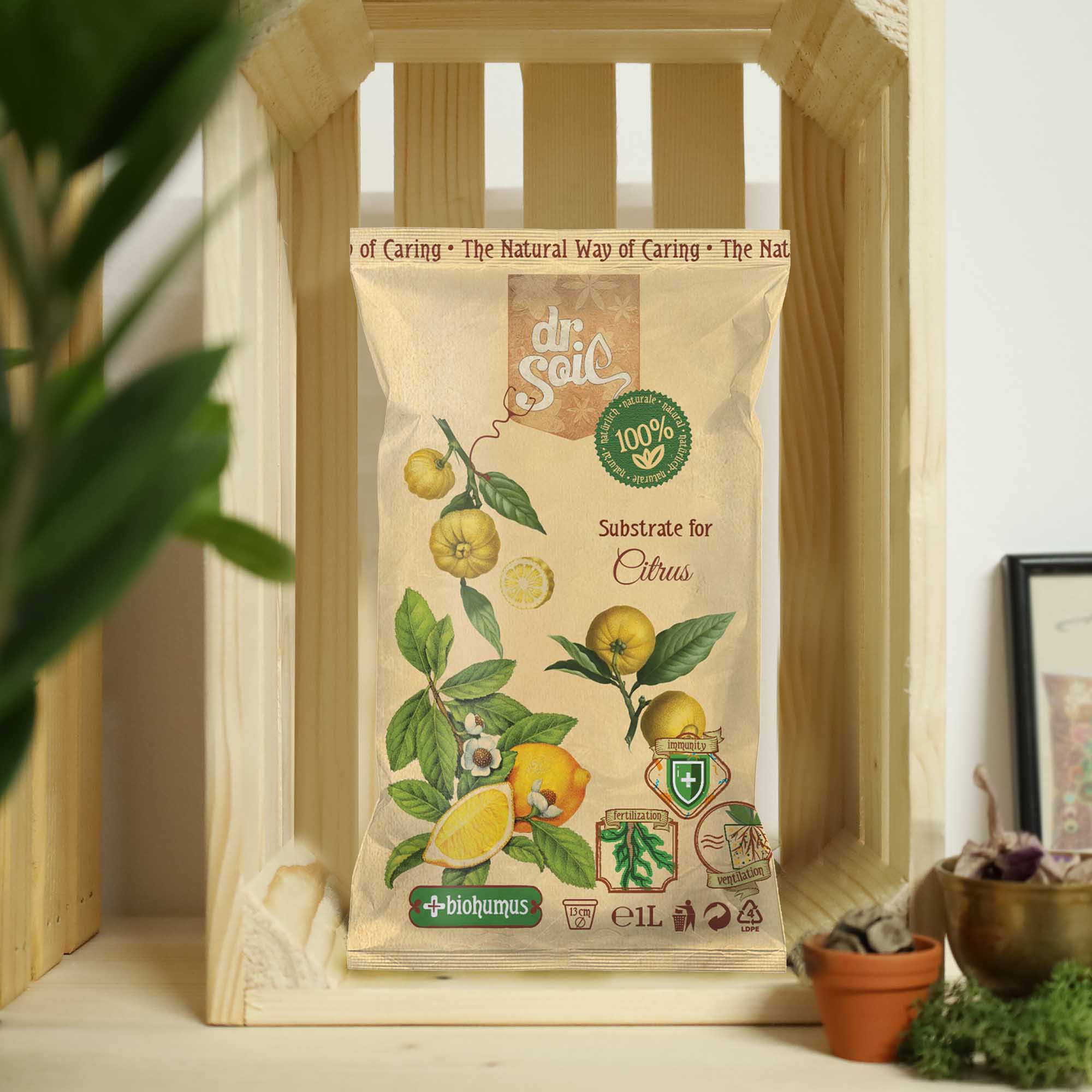
£5.49
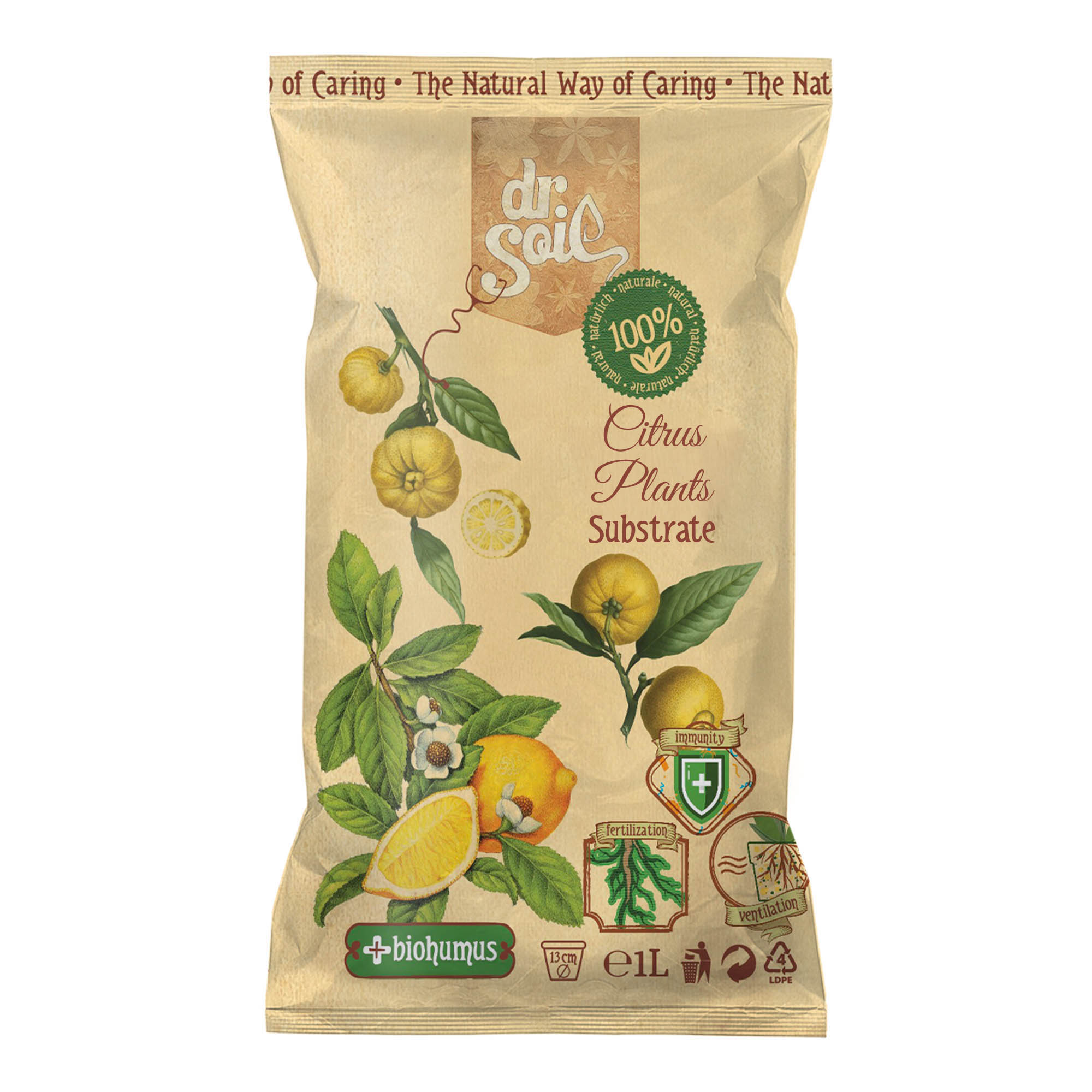
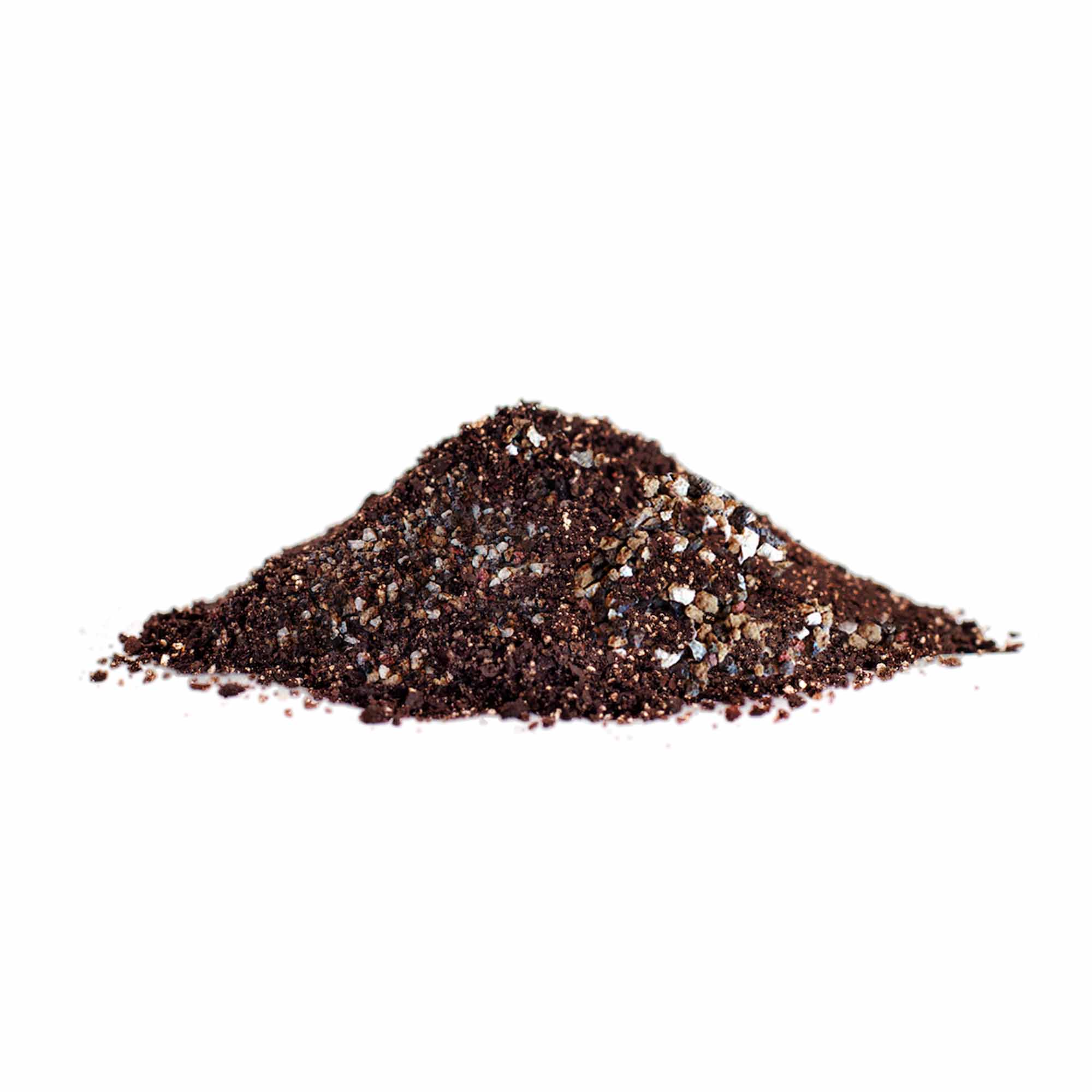
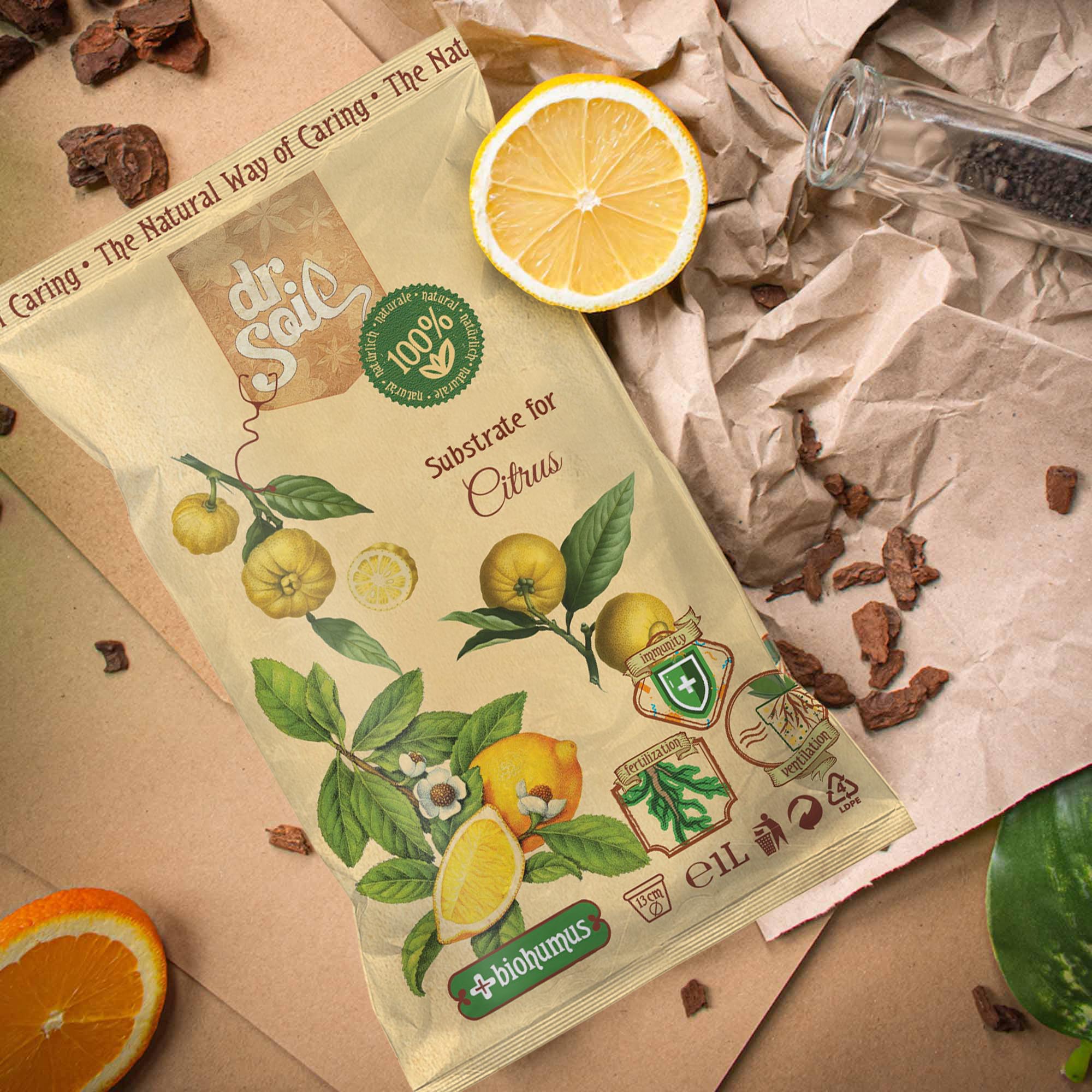
A complete, pre-fertilised growing medium formulated for all citrus trees grown in containers — combining peat, worm castings, Mediterranean pine bark humus, perlite, and organic matter to provide the precise balance of moisture availability, sharp drainage, and long-lasting natural nutrition that citrus root systems require. Pre-fertilised for up to 6 months. No supplementary feeding required during the establishment period.
Citrus trees in containers have a demanding and very specific set of substrate requirements that most standard composts fail to meet. Dr.Soil Citrus Substrate addresses all of them through the synergy of five components:
Dr.Soil Citrus Substrate is formulated for all citrus varieties grown in containers: lemon (Citrus limon), orange (Citrus sinensis), mandarin (Citrus reticulata), pomelo (Citrus maxima), lime (Citrus aurantiifolia), clementine (Citrus clementina), kumquat (Fortunella spp.), and all other citrus and citrus-relative varieties.
Citrus trees are among the most rewarding — and most demanding — container plants in the temperate garden. Their combination of ornamental foliage, fragrant flowers, and edible fruit makes them desirable; their precise substrate requirements make them unforgiving of the wrong growing medium:
The peat provides the moisture retention that prevents drought stress between waterings. The perlite and pine bark create the drainage channels that eliminate waterlogging. The worm castings supply the biological nutrition and immune support that sustains vigorous growth through flowering and fruiting. The organic matter maintains the long-term fertility and biological health of the substrate across the full growing season. The result is a substrate that can sustain a container citrus tree through a full productive season with no additional fertilisation for 6 months — and that provides the physical environment in which citrus roots genuinely thrive.
| Step | Action |
|---|---|
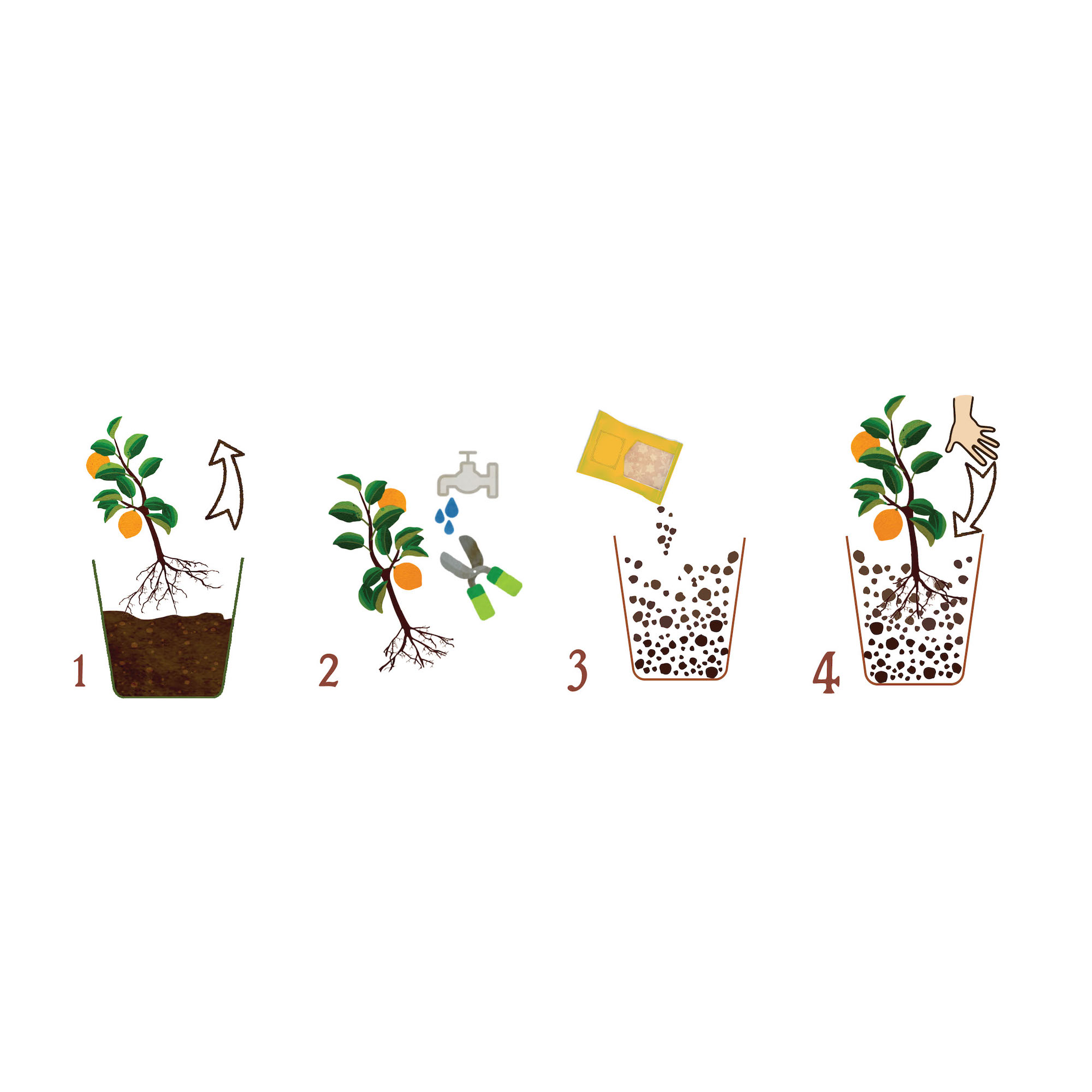
| 1. Choose the container | Select a pot with large, clear drainage holes. Citrus trees prefer pots that are proportionate to their root system — a pot too large relative to the root ball holds more moisture than the roots can use, increasing waterlogging risk. Move up one pot size at each repotting rather than jumping to a much larger container. |
| 2. Add a drainage layer | Place a layer of stones, grit, or expanded clay at the base to ensure free drainage from the bottom of the pot. This layer is particularly important for citrus as it prevents the drainage holes from becoming blocked by roots or substrate over time. |
| 3. Fill and plant | Add a layer of substrate and prepare a planting depression. Remove the tree from its existing container and gently loosen the outer root mass without disturbing the central root ball. Position in the new pot ensuring the root flare (the point where roots diverge from the trunk) is at or slightly above the substrate surface. Fill around the root ball and press evenly. |
| 4. Water in | Water moderately and allow to drain fully. Never allow the pot to stand in the drained water. |
| 5. First 7 days | Water again after 7 days as normal. Allow the substrate surface to dry slightly between waterings — this encourages roots to explore the substrate rather than concentrating at the wet surface. |
| Ongoing care | Water when the top 2–3 cm of substrate feel dry. No fertiliser required for 6 months. After 6 months, feed with a balanced citrus fertiliser during the active growing season (spring through autumn). |
Spring is the optimal repotting season for container citrus — as temperatures rise above 12°C and the tree moves into active growth, repotting into fresh substrate provides the nutritional and biological stimulation that maximises flowering and the subsequent fruit set. Repot before the first flush of new growth appears for best results.
Every 2–3 years as routine maintenance. Container citrus trees exhaust their growing medium over time — the substrate compacts, nutrients are depleted, and the balance of the root system to available substrate volume requires correction. Repotting into fresh Dr.Soil Citrus Substrate every 2–3 years is one of the most effective maintenance steps for long-term container citrus health.
When the tree shows signs of substrate decline — persistent leaf yellowing despite correct watering and fertilisation, reduced growth rate, or roots emerging from the drainage holes are all indicators that the current substrate has become exhausted or compacted and the tree will benefit from repotting.
Dr.Soil Citrus Substrate · Net volume: 1 litre · Pre-fertilised for up to 6 months · Ready-to-use · Composition: peat, worm castings, Mediterranean pine bark humus (min. 10%), perlite, organic matter · No synthetic fertilisers · No chemical additives