£5.49
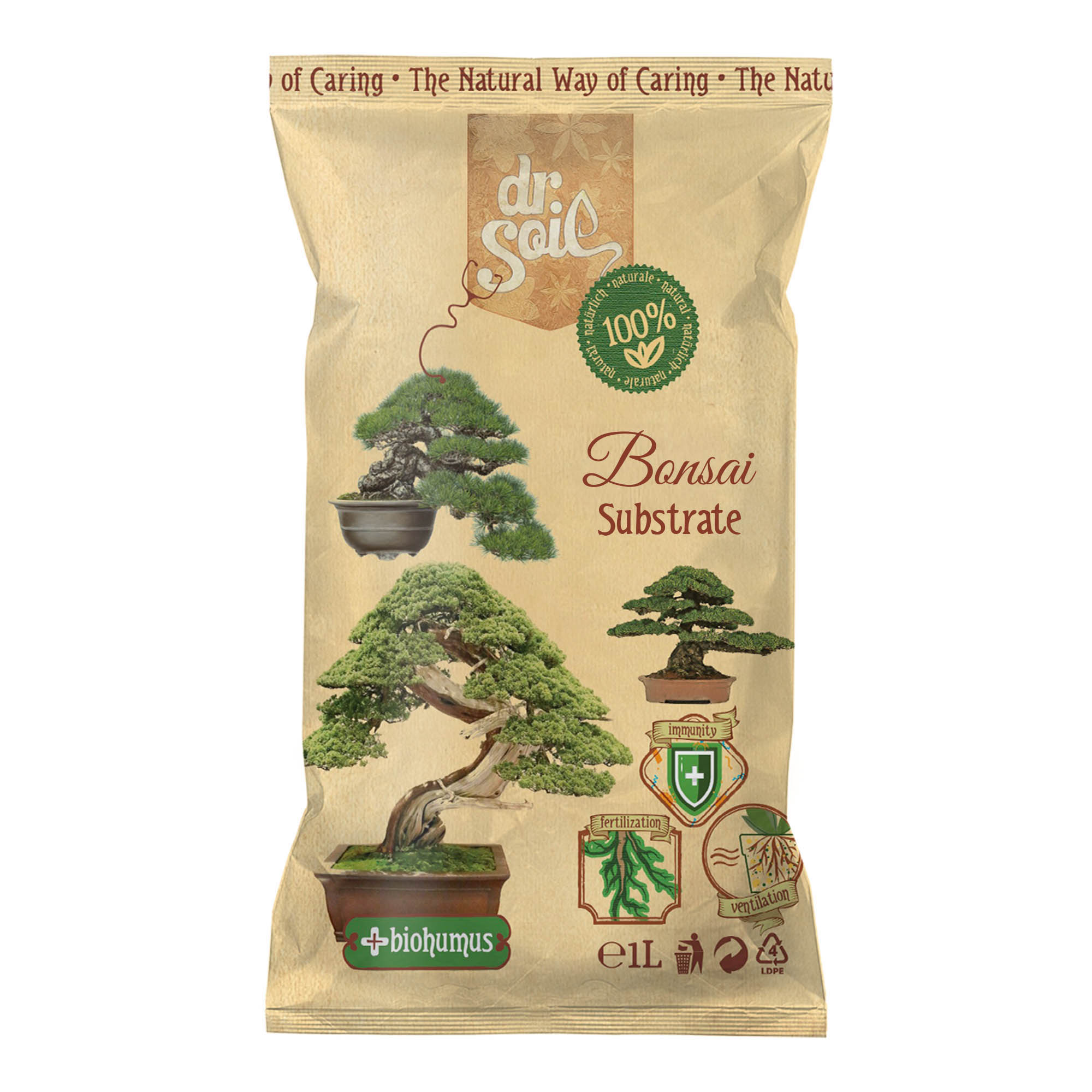
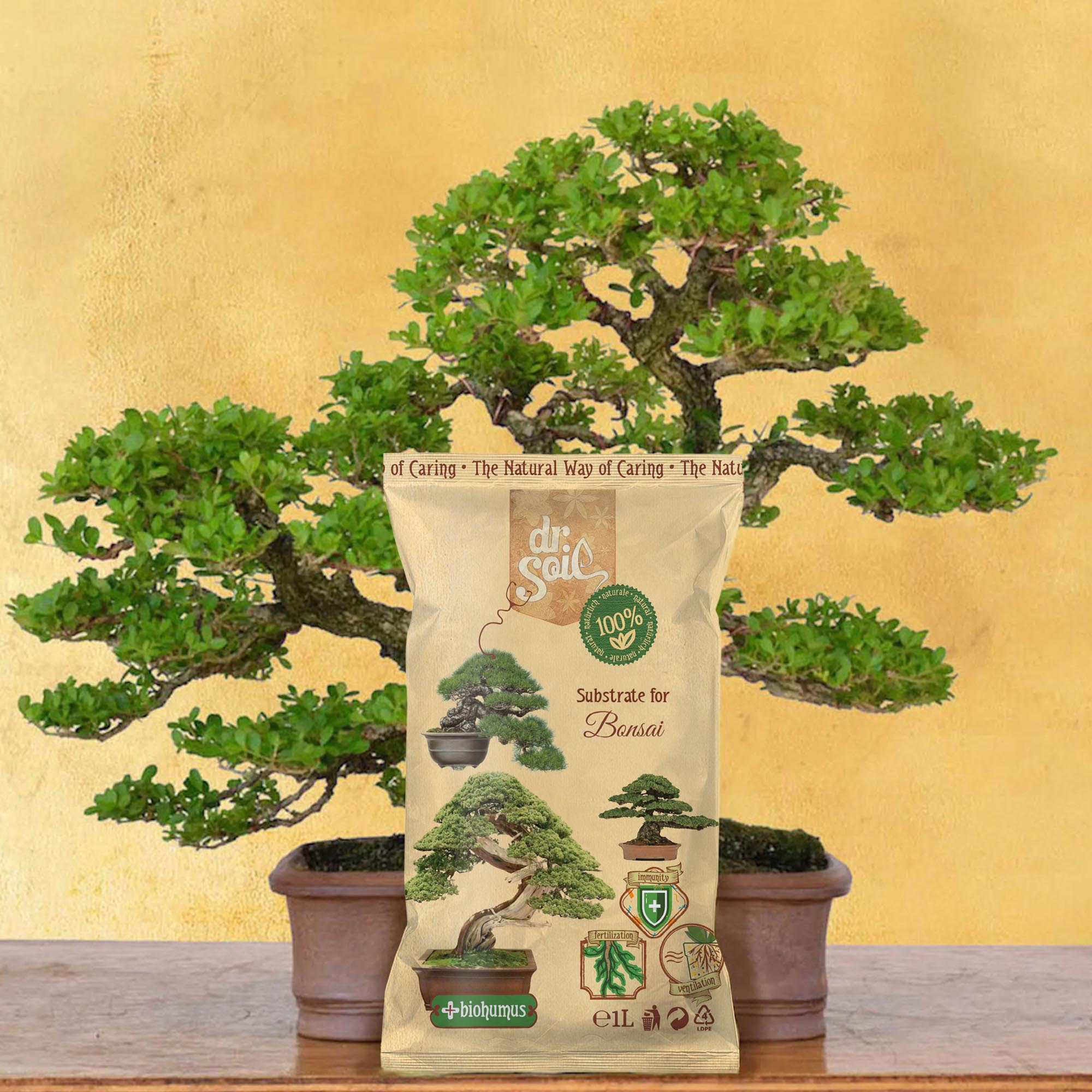
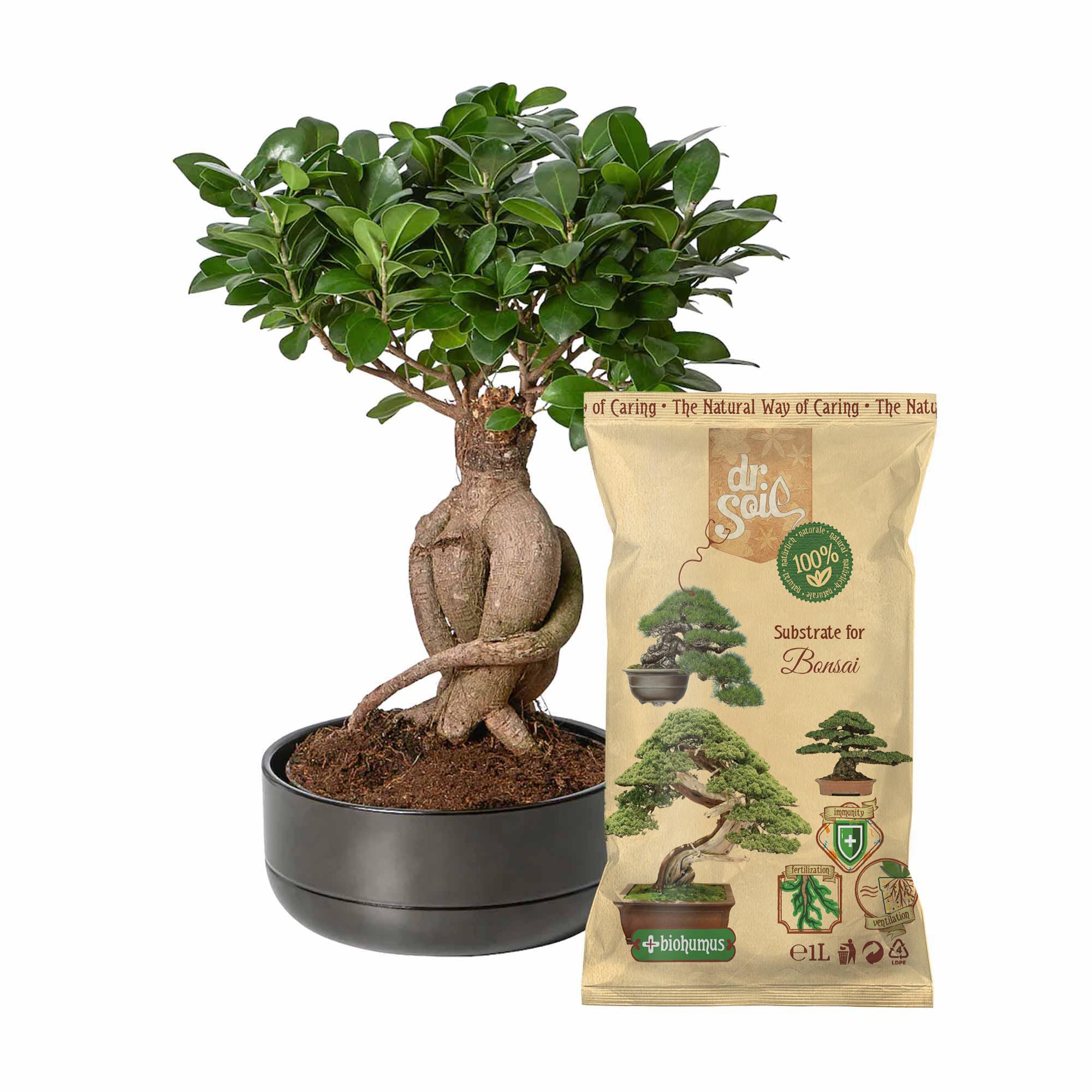
A specialist pre-fertilised growing medium formulated for all bonsai styles and sizes — combining peat, worm castings, Mediterranean pine bark humus, vermiculite, and red expanded ceramic granules into a substrate that provides the enhanced drainage, superior root aeration, mould-resistant conditions, and calibrated natural nutrition that bonsai cultivation demands. Pre-fertilised for up to 6 months.
Bonsai substrate design is a discipline in itself, with decades of refinement by professional growers worldwide. Dr.Soil Bonsai Substrate draws on this knowledge to create a formulation that balances the drainage, aeration, moisture buffering, and biological nutrition requirements of all bonsai species:
Dr.Soil Bonsai Substrate is formulated for all bonsai styles, sizes, and training techniques, including Shito / Keshitsubu (thimble bonsai), Mame (palm-size), Shōhin (small), Komono / Kotate Mochi (medium small), Moyogi (informal upright), Shakan (slanting), Kengai (cascade), Han Kengai (semi-cascade), Fukinagashi (windswept), and all other bonsai forms. Suitable for both deciduous and evergreen species.
Bonsai cultivation is fundamentally different from conventional container gardening in one critical respect: the root system is deliberately constrained in a shallow tray or pot, creating a growing environment with very limited volume and very high surface area relative to that volume. This creates a set of substrate requirements that are more exacting than for any other form of container cultivation:
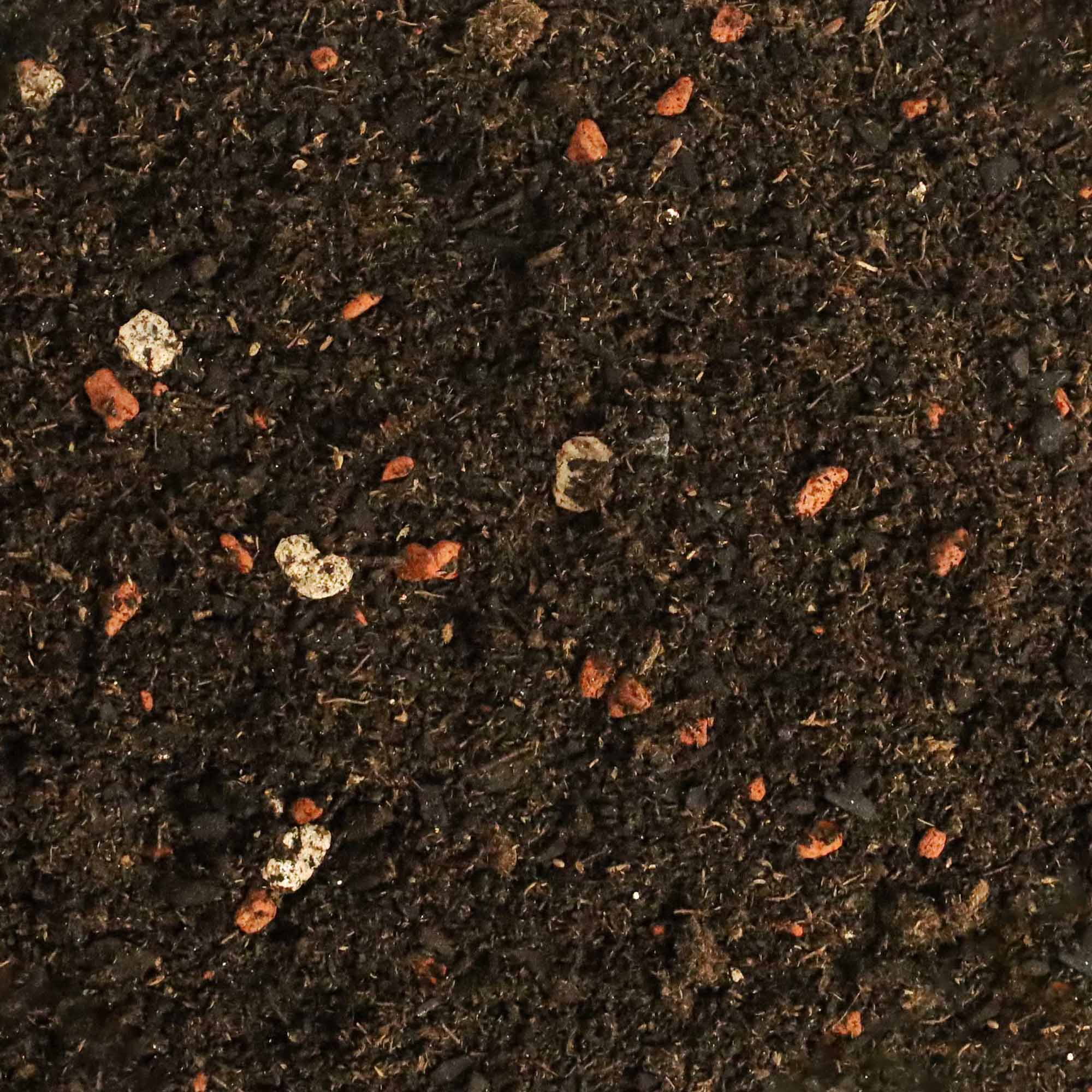
The red expanded ceramic granules provide the structural drainage and moisture buffering that replicates the function of traditional akadama in the substrate. The pine bark fraction amplifies drainage, resists compaction, and actively suppresses mould development. The vermiculite buffers moisture and provides trace mineral nutrition between waterings. The worm castings deliver calibrated biological nutrition and root development hormones that support the compact, dense root systems that healthy bonsai require. Together they create a substrate that performs consistently throughout the growing season without the structural degradation or mould problems associated with conventional organic potting composts in bonsai application.
| Step | Action |
|---|---|
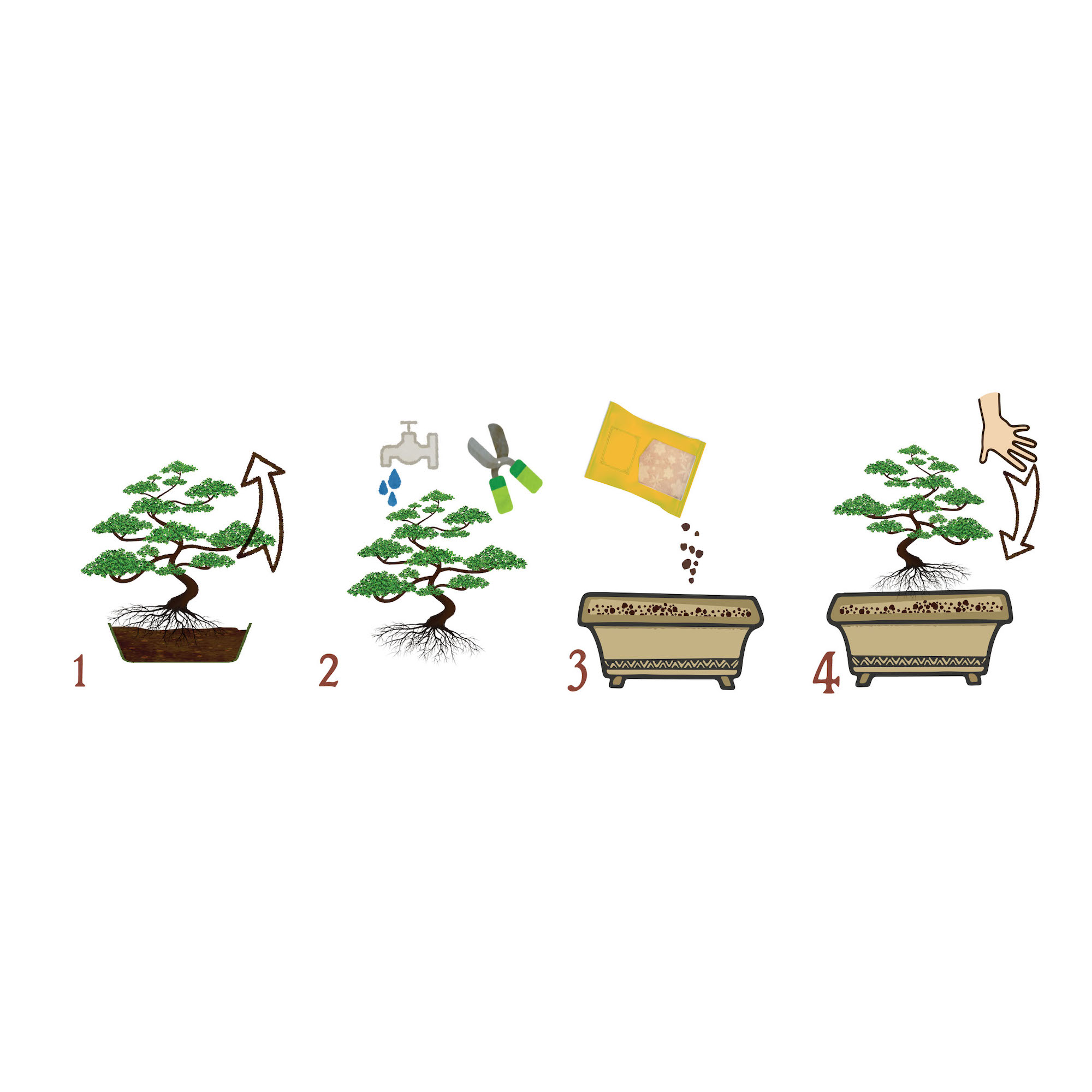
| 1. Choose the container | Select a bonsai tray or pot appropriate to the size and style of the tree. Ensure drainage holes are adequate — for bonsai trays, multiple drainage holes are standard. Cover drainage holes with mesh to retain substrate whilst allowing free water flow. |
| 2. Add a drainage layer | Add a thin layer of coarse grit or expanded clay granules at the base of the tray to ensure immediate drainage from the substrate above. |
| 3. Position the tree | Remove the tree from its existing container, carefully comb out the outer root mass with a root hook, and remove as much old substrate as possible from the roots without cutting healthy roots. Position the tree in the tray at the desired angle and secure if required with wiring through the drainage holes. |
| 4. Fill and firm | Fill the tray around the root mass with substrate, working it into all spaces with a chopstick or root hook to eliminate air pockets. The substrate surface should be slightly mounded towards the trunk and slope away to the tray edges for good drainage. |
| 5. Water in | Water gently and thoroughly until water runs clear from the drainage holes. Repeat after 7 days. Place in a sheltered location for the first 2–4 weeks while roots re-establish. |
| Ongoing care | Water when the surface of the substrate begins to dry. No fertilisation required for 6 months. After 6 months, supplement with a balanced organic bonsai fertiliser during the active growing season. |
Early spring, just before bud break is the traditional and optimal repotting season for most bonsai species. At this moment, the tree has sufficient energy reserves from the previous season, it is approaching maximum root regeneration capacity, and the growing season ahead provides the longest possible recovery period. Repotting in early spring into fresh Dr.Soil Bonsai Substrate provides the biological and nutritional environment that maximises vigorous growth through the season.
Species-specific timing applies: deciduous trees (maples, elms, hornbeam) repot in early spring before bud break; flowering species (prunus, azalea) repot immediately after flowering; pines repot in spring when candles are extending; junipers can be repotted in spring or early autumn. When in doubt, spring is always the safer choice.
Every 1–2 years for young, vigorous trees; every 2–5 years for established trees. The repotting frequency depends on how quickly the tree fills its container with roots. When the root mass begins to lift out of the tray as a solid mass, and roots begin circling the inside of the container, it is time to repot.
Dr.Soil Bonsai Substrate · Net volume: 1 litre · Pre-fertilised for up to 6 months · Ready-to-use · Composition: peat, worm castings, Mediterranean pine bark humus (min. 15%), vermiculite, red expanded ceramic granules, organic matter · Enhanced drainage and aeration · Mould-resistant formulation · No synthetic fertilisers