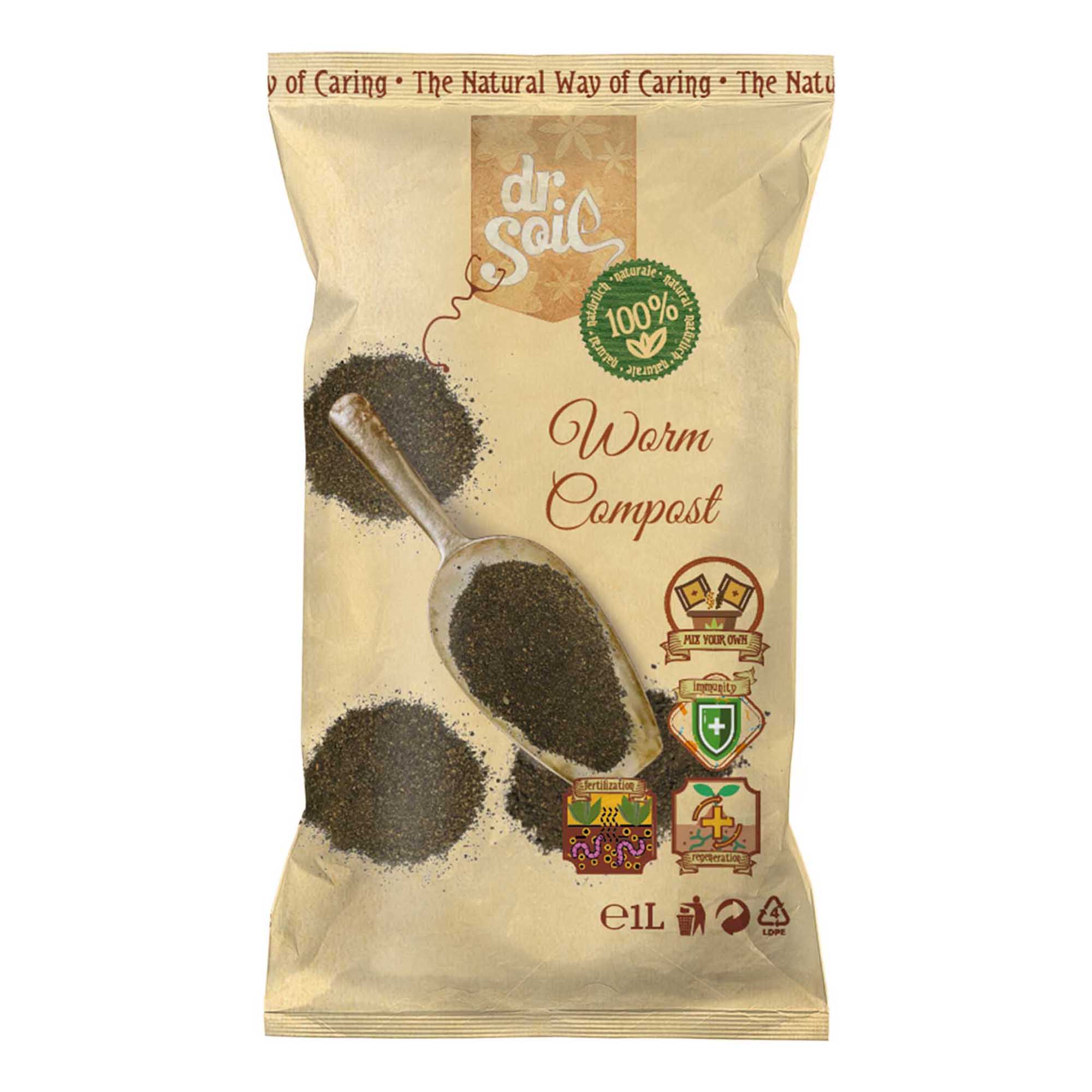
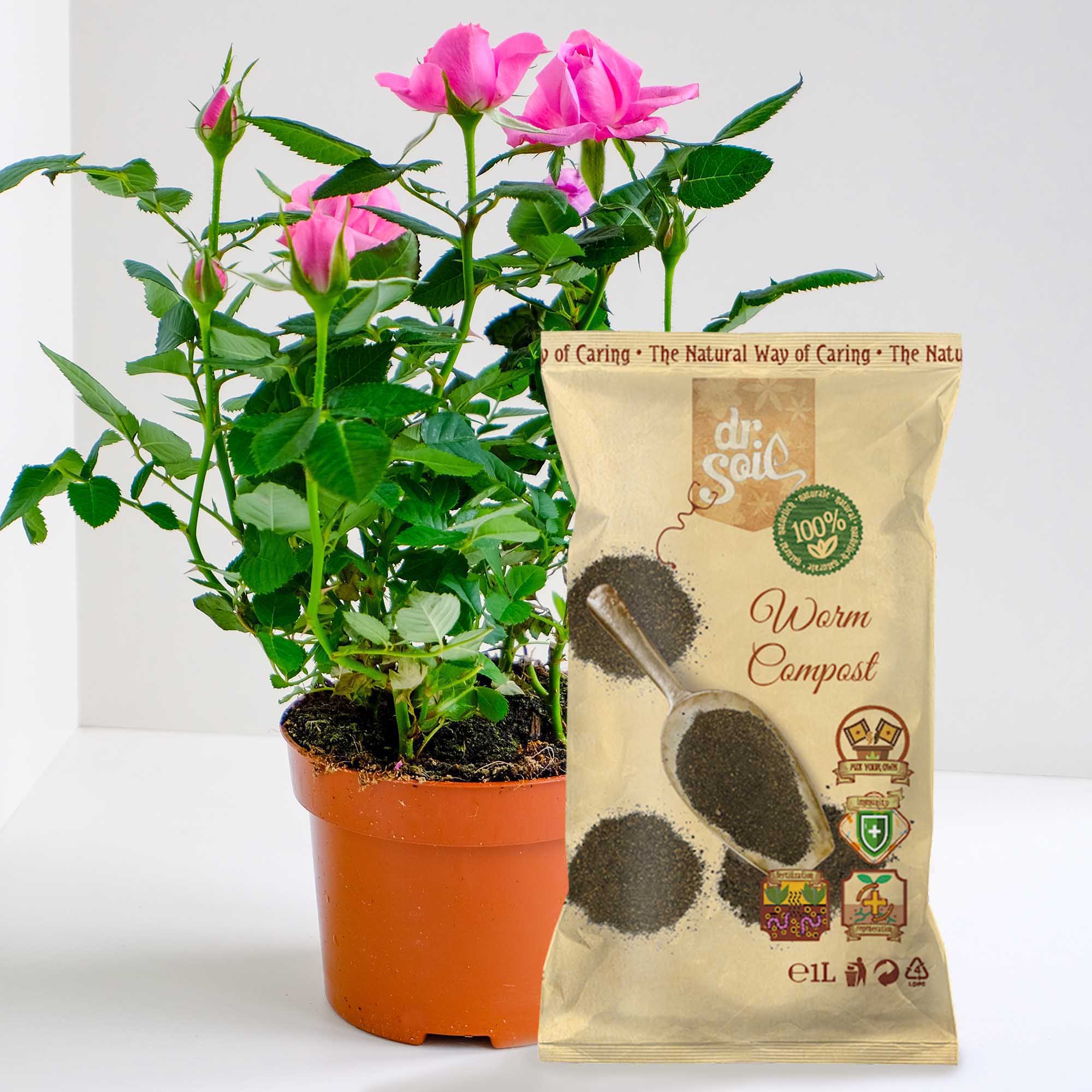
Boost soil fertility with Dr.Soil Biohumus 1l – the essential ingredient for a vibrant and healthy garden. Invest in your plant’s future!
£6.99
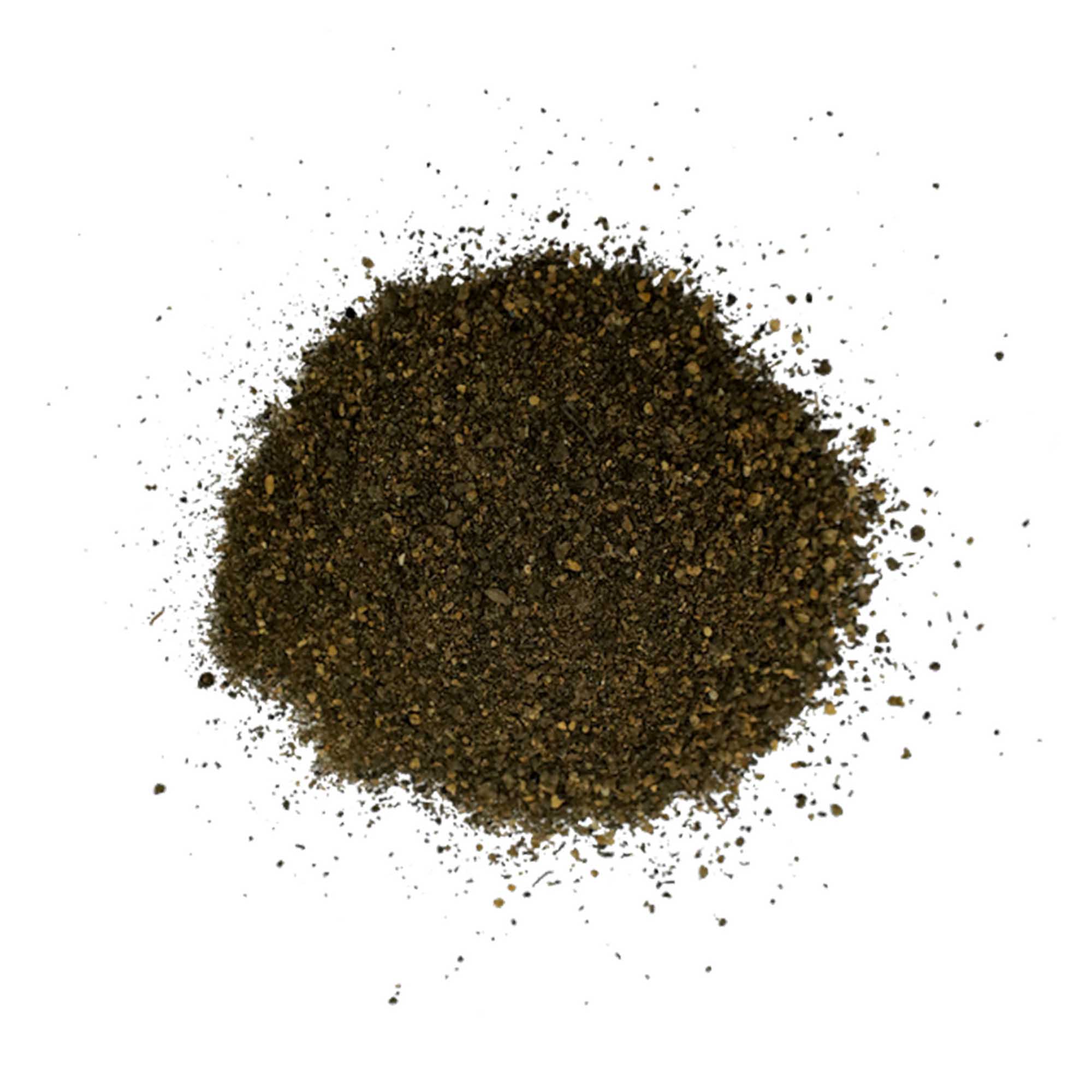
Fine sieved vermicompost produced by Eisenia fetida (red wiggler) earthworms fed on a mixed feedstock of plant material and animal manure — a biologically rich, odourless amendment that simultaneously functions as a fertiliser, soil conditioner, microbial inoculant, and biostimulant. Contains plant growth hormones, humic and fulvic acids, and a living microbial community 10–20 times more active than standard compost. Cannot burn plants at any application rate.
Worm castings — also known as vermicast or vermicompost — are the excreta of composting earthworms. As organic material passes through the worm’s digestive tract, it undergoes a biological transformation that is fundamentally different from conventional thermal composting. The material is physically ground to a very fine particle size; it is enzymatically broken down by the worm’s digestive chemistry; it is colonised by the dense microbial community that lives within the worm’s intestinal environment; and it is coated with a thin layer of worm mucus as it passes through the body. This mucus coating is the feature that most distinguishes vermicast from all other organic amendments.
The mucus coating creates a time-release nutrient matrix around each granule of the finished material. Nutrients are present in immediately plant-available forms, but they are physically protected within the mucus structure and released gradually as the coating erodes — over approximately two months under normal conditions. This is why worm castings provide immediate nutrition without burn risk: the nutrients are present and available, but the mucus regulates their release rate in a way that no synthetic slow-release fertiliser can match biologically.
Worm castings and compost are both organic amendments, but they operate at different levels of biological sophistication. Compost provides organic matter and basic nutrition; worm castings add the biological complexity, hormonal activity, and nutrient bioavailability that compost cannot deliver. The key differences: microbial activity in vermicast is 10–20 times higher than in conventional compost; nutrients in vermicast are immediately plant-available rather than requiring further microbial breakdown; vermicast contains plant growth hormones (auxins, gibberellins, and cytokinins) that are absent from conventional compost; and the mucus coating creates a slow-release mechanism that compost does not possess. Worm castings and compost are best used together, not interchangeably.
Dr.Soil Worm Castings are designed as a premium biological amendment and gentle fertiliser for all horticultural applications where biological activity, seedling safety, root development, and nutrient efficiency are priorities.
The NPK ratio of worm castings varies depending on the feedstock and cannot be stated as a fixed figure — this is true of all genuine vermicast and is a marker of its biological authenticity. What is consistent across all quality worm castings is the following profile:
The plant growth hormones deserve particular emphasis: they are found in no other common amendment. These compounds directly stimulate root initiation and branching, cell division, and germination — which is why seedlings grown with worm castings show measurably faster development than those grown in otherwise identical conditions without them.
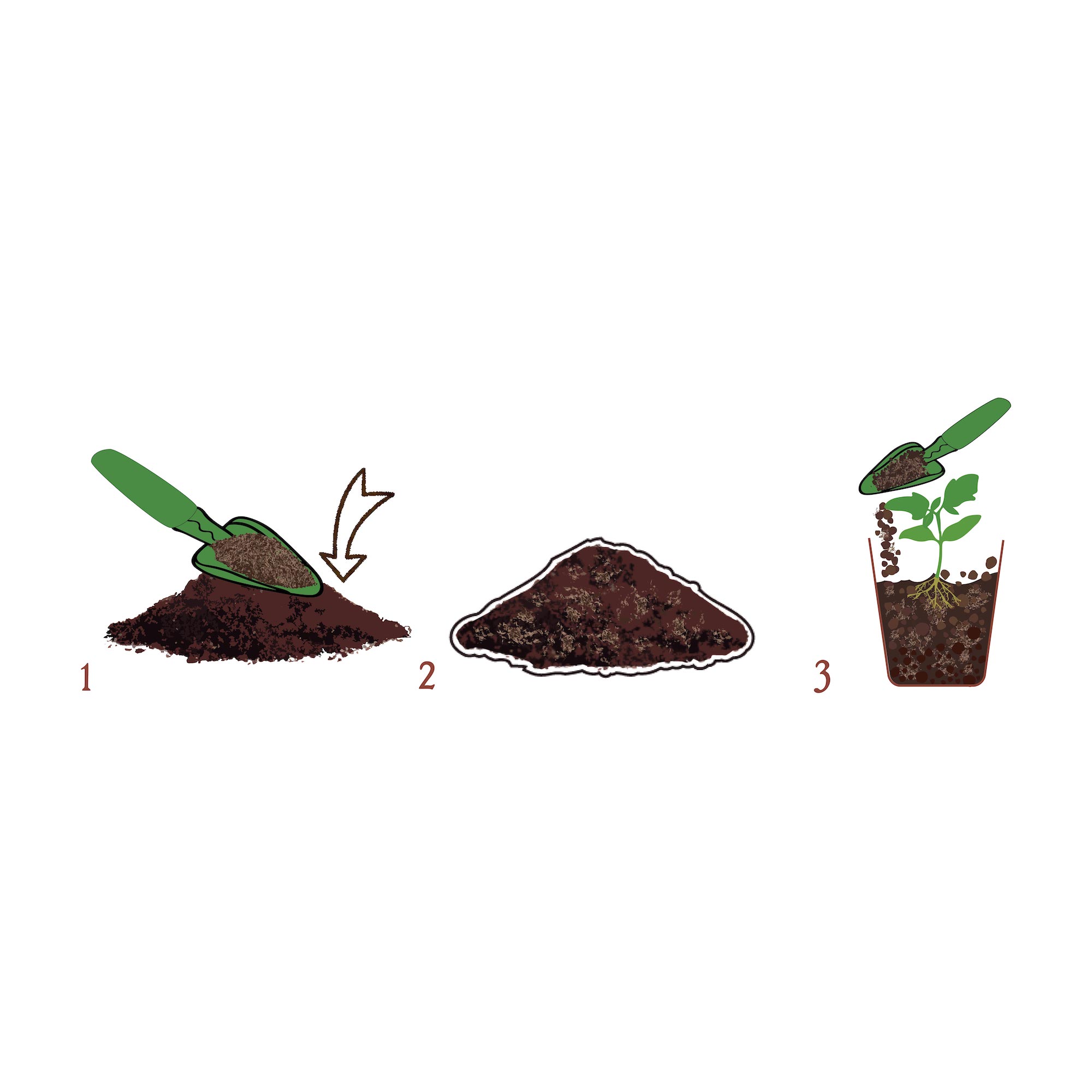
Dr.Soil Worm Castings are gentle enough to use directly in contact with seeds, roots, and seedlings — no dilution is required for plant safety. The fine sieved texture integrates seamlessly into any substrate blend without creating lumps or impeding drainage.
| Application | Rate | Method |
|---|---|---|
| Seed-sowing mix | 10–20% by volume | Blend with fine coir, vermiculite, or sieved compost. Safe for even the smallest seeds with no risk of burning. The growth hormones and microbial content accelerate germination and support early root development. |
| General potting mix | 10–25% by volume | Blend evenly with compost, coir, and structural amendments. At 10–15%, provides sustained nutrition and biological activity throughout the growing season. Diminishing returns above 30%. |
| Planting hole and transplanting | A generous handful per plant | Add directly to the planting hole and mix with surrounding soil. Place the root ball on top. The plant growth hormones and microbial inoculants significantly reduce transplant shock and accelerate root establishment. |
| Top-dressing | 1–2 cm surface layer | Apply to the substrate surface and water in thoroughly. Nutrients and biological activity are carried into the root zone with each irrigation. Particularly effective at the start of spring and during heavy flowering or fruiting. |
| Compost tea | 1 part castings to 10 parts water | Steep in non-chlorinated water for 24 hours with gentle aeration (aquarium pump). Strain and apply as a soil drench. Dilute 1:1 for foliar application. Use immediately — microbial population declines rapidly after 4–6 hours without aeration. |
The 10–20% rule: Research consistently shows that the optimal proportion of worm castings in a substrate is 10–20% by volume. Below 10%, benefits are present but modest. Between 10–20%, measurable improvements in germination, root development, plant vigour, and yield are reliably observed. Above 30%, returns diminish; above 50%, plant performance may decrease. More is not better with worm castings.
Worm castings are most valuable at the start of seed sowing season (late winter to spring), when the growth hormones and microbial content provide the biggest boost to germination and early establishment. At transplanting in spring, a handful in the planting hole makes a measurable difference to how quickly plants settle in and begin active growth. As a top-dressing in early summer, before flowering and fruiting begins, the available nutrients and biology support the plant at its moment of highest demand. For houseplants, incorporate at any repotting throughout the year.
Dr.Soil Worm Castings are a living product. Store in the original sealed bag in a cool, shaded location away from direct sunlight and frost. The optimal storage temperature is 5–20°C. Keep slightly moist — the microbial community requires moisture to remain viable. If the bag has dried out in storage, mist lightly before use to reactivate biological activity.
Worm castings have a pleasant, neutral earthy odour similar to healthy forest floor soil. Any ammonia or unpleasant smell indicates incomplete processing. Dr.Soil Worm Castings are fully matured and stable.
Dr.Soil Worm Castings — Fine Sieved Vermicompost · Net volume: 1 litre · Origin: Romania · Species: Eisenia fetida · Feedstock: mixed plant material and animal manure · Texture: fine sieved · pH: ~7.0 (neutral) · Living product — high microbial activity · No additives · Pathogen-free · No burn risk